The History of Caricature
& Its Famous Targets
For five centuries, the pencil has been a weapon. From Luther mocking the Pope to Gillray ridiculing Napoleon — this is the history of caricature as political force.
What role has caricature played in History?
For five centuries, caricature has patiently opened up spaces of liberty. Today, some would like to reintroduce blasphemy laws. Cabu, Wolinski, Charb and others paid for that freedom with their lives.
The Reformation (16th century)
With the invention of the printing press, caricature became a formidable weapon in religious wars. Protestants, like Martin Luther, used it to criticise the Pope and the clergy, depicting them as greedy monsters. These simple images were easily understood by everyone — including the illiterate.
Albrecht Dürer: protest hidden in plain sight
During the Peasants’ War (1524–1525), Dürer supported the rebels. Faced with repression, he hid his criticism in a drawing manual. He proposed a monument that seemingly celebrated the lords’ victory — but which was, in reality, a hidden critique. The column was assembled from agricultural tools; at its top, a weeping peasant, stabbed in the back, recalled the suffering of Christ. A tribute to the “peasant martyr” that anyone could pass off as a decorative study.
The French Revolution (1789)
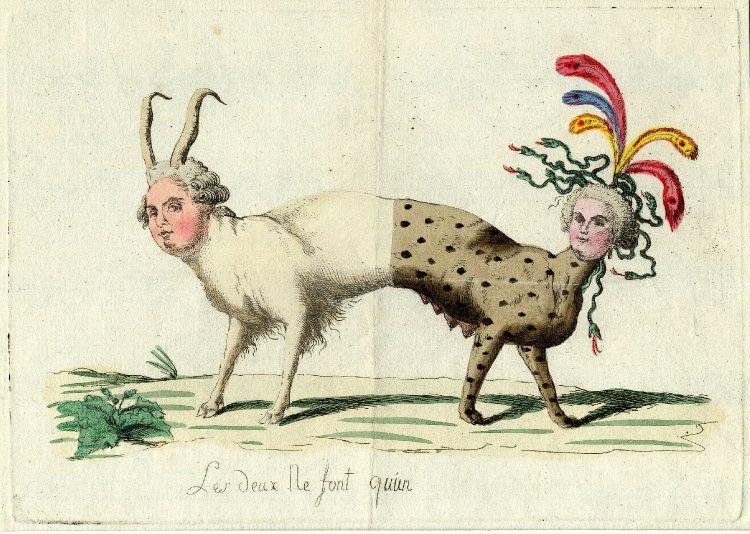
With the rise of freedom of expression after 1789, a wave of caricatures overwhelmed France. The king, Marie Antoinette, and the aristocrats became favourite targets. Their privileges were mocked to desecrate them. Caricature became a political tool to spread revolutionary ideas — and to dehumanise those about to be sent to the guillotine.
The Golden Age (19th century)

Thanks to lithography and the newspapers, caricature reached its peak. In France, journals such as La Caricature and Le Charivari waged a veritable war against King Louis-Philippe. Artists like Daumier and Grandville risked prison. Caricature was then recognised as a counter-power.
Who were the famous targets of caricature?
Louis-Philippe I and “The Pear”

Under the July Monarchy (1830–1848), caricaturist Charles Philipon, exasperated by continuous censorship trials, had the brilliant idea of drawing King Louis-Philippe transforming into a pear across four panels. The message was twofold: the king’s face looked like a pear, and in French slang, “poire” means a fool. The symbol became so popular that a simple drawing of a pear on a wall was enough for everyone to understand.
The Dreyfus Affair: a nation divided

At the end of the 19th century, the Dreyfus affair tore France apart. This espionage case, against a backdrop of rampant anti-Semitism, became a battlefield for caricaturists. The most famous visual document of the affair remains “A Family Dinner” by Caran d’Ache, which perfectly illustrated the deep social division in two devastating panels.
Hitler: the universal target
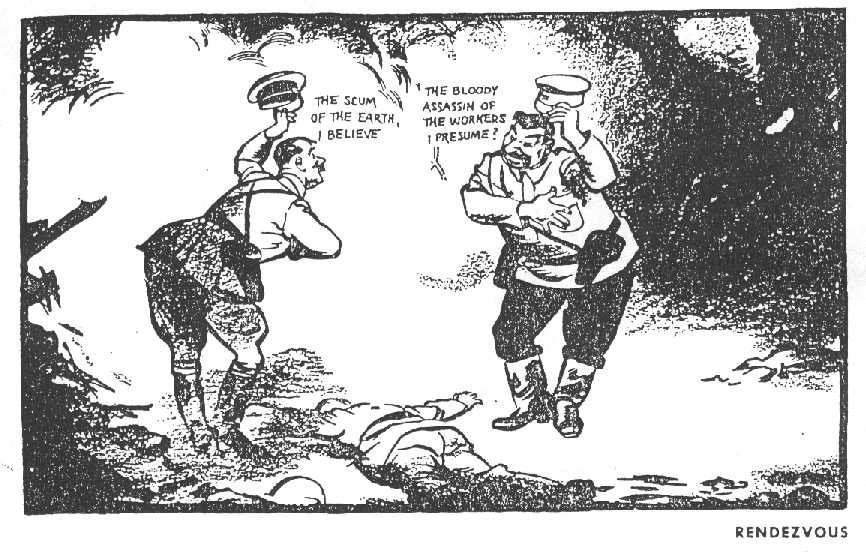
Few figures have been caricatured as much as Adolf Hitler. His megalomania and his famous moustache made him a prime target for cartoonists around the world from the early 1930s onwards — long before most politicians had understood the danger. They depicted him as a monster, a madman, or a bloodthirsty clown. They were right. And they used laughter as a weapon of resistance against something that was not, in truth, remotely funny.
The British cartoonist David Low, in particular, skewered Hitler relentlessly in The Evening Standard — so effectively that Hitler personally demanded his dismissal in diplomatic negotiations with the British government. (The British refused.)
Napoleon and the English pencil
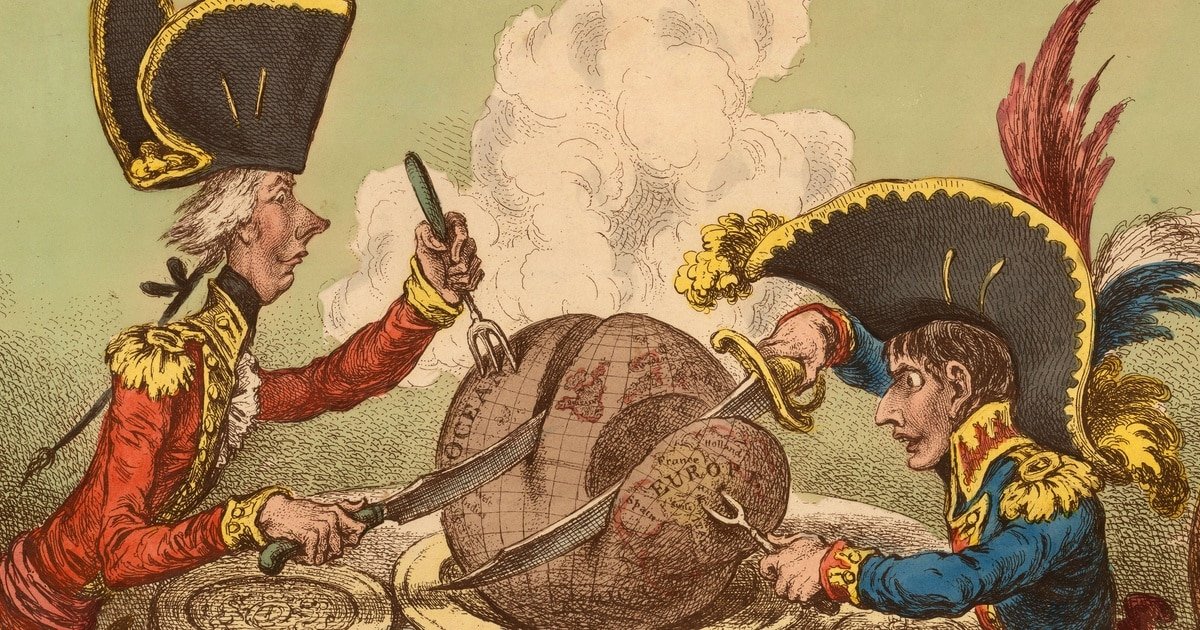
In England, hatred of Napoleon exploded after 1803. Caricaturists like James Gillray were unleashed. They broke the myth by depicting him as an angry dwarf, mocking his height, his vanity and his megalomania. The goal was to ridicule him — to undermine his reputation for invincibility among the English public and among his own troops.
Elsewhere in Culture
In brief
- Caricature was born in Italy around 1590, with the Carracci brothers in Bologna; from the 15th century onwards, the printing press allowed the mass diffusion of satirical images.
- For 5 centuries, from Luther and the Protestant Reformation to Charlie Hebdo, it has patiently opened up spaces of liberty.
- In 1831, Charles Philipon drew Louis-Philippe transforming into a pear: a symbol so popular that a simple pear was enough for everyone to understand.
- This chapter presents 6 annotated works, from Marie Antoinette as a harpy (1791) to David Low’s Rendezvous (1939).
| Historical Event | Famous Target | Caricature Objective | Medium |
|---|---|---|---|
| Protestant Reformation (16th c.) | The Pope and the Clergy | Denounce corruption | Woodcut engravings |
| French Revolution (1789) | Louis XVI and Marie Antoinette | Desecrate royalty | Broadside prints |
| July Monarchy (1830–48) | Louis-Philippe I | Criticise the bourgeois regime | Le Charivari |
| Dreyfus Affair (1894–1906) | The army, anti-Semitism | Reveal social fractures | Le Figaro / La Libre Parole |
| Second World War | Hitler, Mussolini, Stalin | Demonise the enemy | Allied press |
— Sébastien Rieu
Want to explore this subject interactively? Prof‑Toutou can explain periods, artists and techniques or turn the topic into a quiz.