Gustave Doré
Why is he a genius of illustration and painting?
In short: A 19th-century artist with a staggering 100,000 works, Gustave Doré was a visionary illustrator, painter, and caricaturist whose masterful use of chiaroscuro profoundly influenced both modern art and early cinema.
| Facet | Technique | Examples |
|---|---|---|
| Chronicler | Wood engraving | London: A Pilgrimage |
| Painter | Oil on canvas | The Court of Miracles |
| Satirist | Drawing & Caricature | The Glutton’s Table |
Gustave Doré (1832–1883) was a prolific 19th-century artist. As an illustrator, painter, caricaturist and engraver, he produced more than 100,000 works throughout his career. His current level of mainstream popularity is inversely proportional to his immense importance in art history, particularly regarding his influence on the birth of cinema. More details: Wikipedia.
These images are high-quality reproductions; some were personally scanned from rare books, while others come from the French National Library (BNF).
Discover the illustrator of Montmartre’s street children: Poulbot.
What are Gustave Doré’s most remarkable works and paintings?
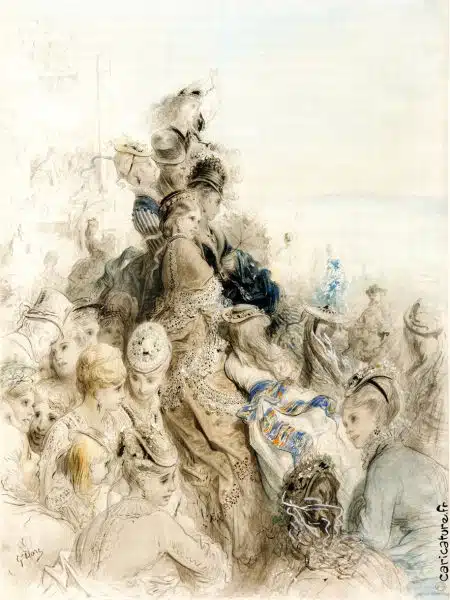
The Great Derby
Year: 1872
Technique: Wood engraving
A scene of the famous Epsom horse race, showing the excitement and diverse crowd, published in his work on London.
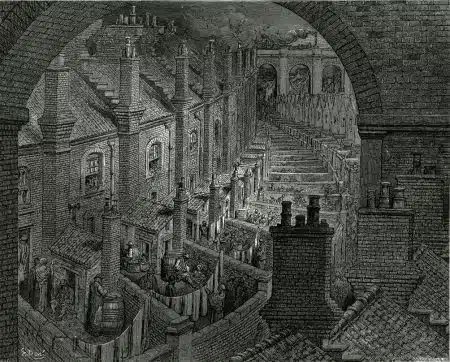
Over London by Rail
Year: 1872
Technique: Wood engraving
A striking view of London’s working-class neighbourhoods from a railway viaduct, highlighting the density and poverty of the Industrial Era.
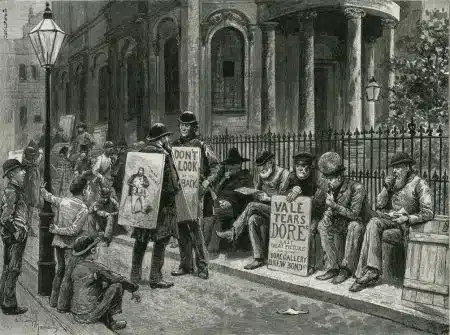
Sandwich-Men
Year: 1872
Technique: Wood engraving
A representation of urban hardship through these men carrying advertising boards just to survive.
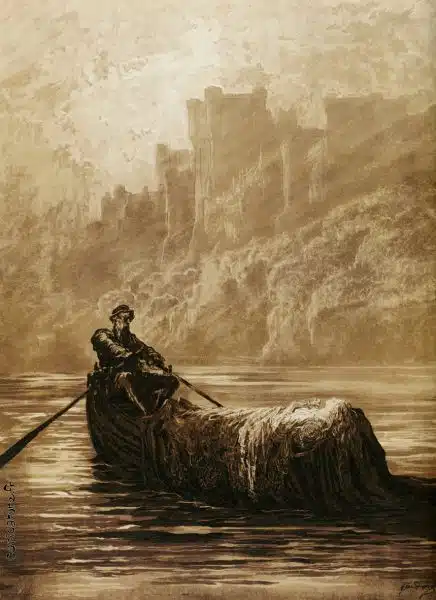
The Funeral Boat of Elaine
Year: 1867
Technique: Wood engraving
Illustration of Tennyson’s poem, depicting the tragic and poetic scene of Elaine of Astolat who died for her love of Lancelot.
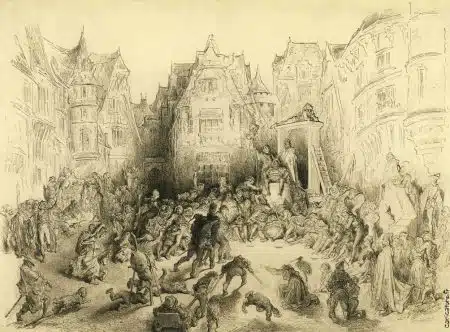
The Court of Miracles
Year: c. 1870
Technique: Oil on canvas
A genre scene inspired by the underworld of Paris, a subject Doré explored for works such as The Hunchback of Notre-Dame.
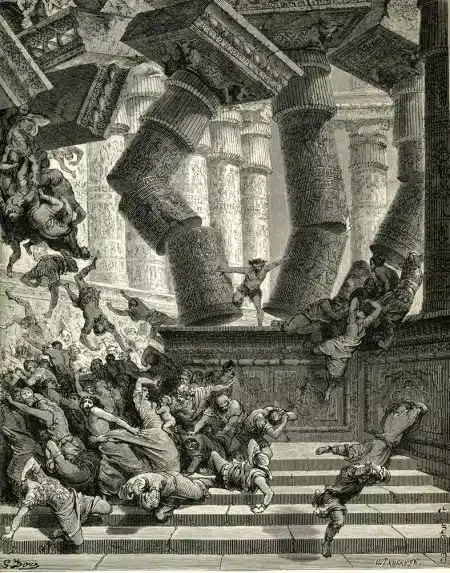
The Death of Samson
Year: 1866
Technique: Wood engraving
Dramatic illustration of the biblical episode where the blinded Samson brings down the temple columns upon the Philistines and himself.
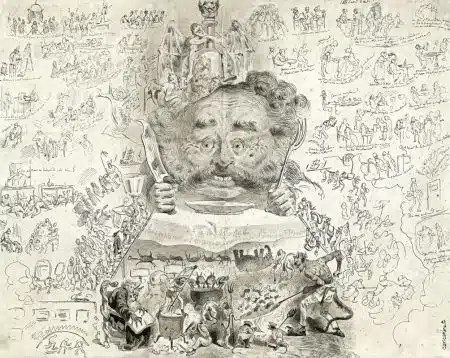
The Glutton’s Table
Year: c. 1860
Technique: Caricature / Engraving
Satirical scene of the bourgeoisie and their excesses, a recurring theme in Doré’s early works as a caricaturist.

Illustration for Rabelais
Year: 1854
Technique: Wood engraving
Part of a series of illustrations for the works of Rabelais, where Doré’s grotesque and exuberant style truly shines.
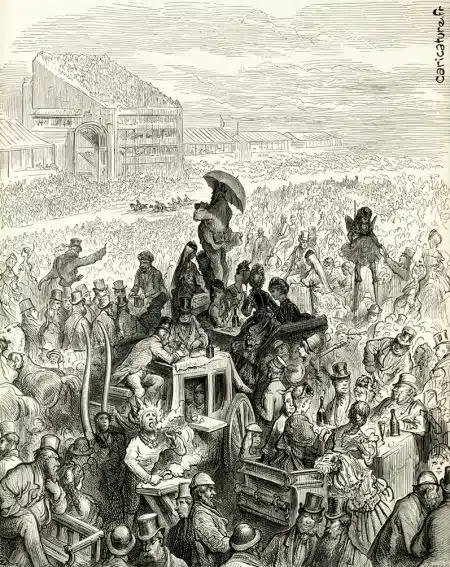
The Derby at Lunch
Year: 1872
Technique: Wood engraving
Another scene from the Epsom Derby, focusing on picnics and social interactions on the sidelines of the race.
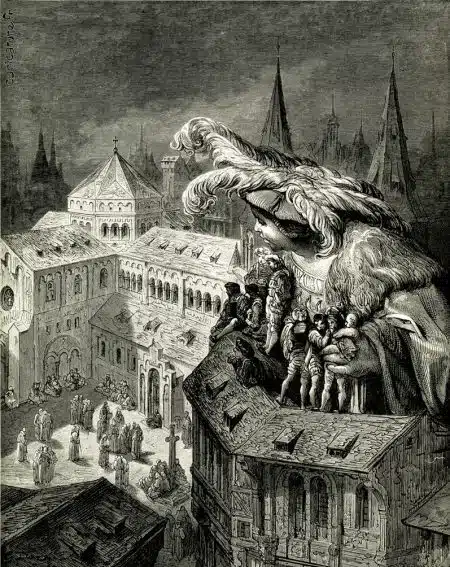
Illustration for Gargantua
Year: 1854
Technique: Wood engraving
Similar to the Rabelais series, this engraving depicts a scene of the giant Gargantua from his literary illustrations.
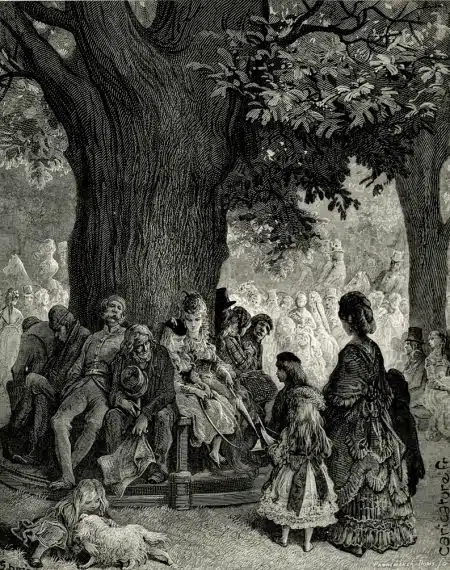
The Great Tree, Kensington Gardens
Year: 1872
Technique: Wood engraving
A peaceful scene showing Londoners relaxing in the shade of a large tree in one of the city’s royal parks.
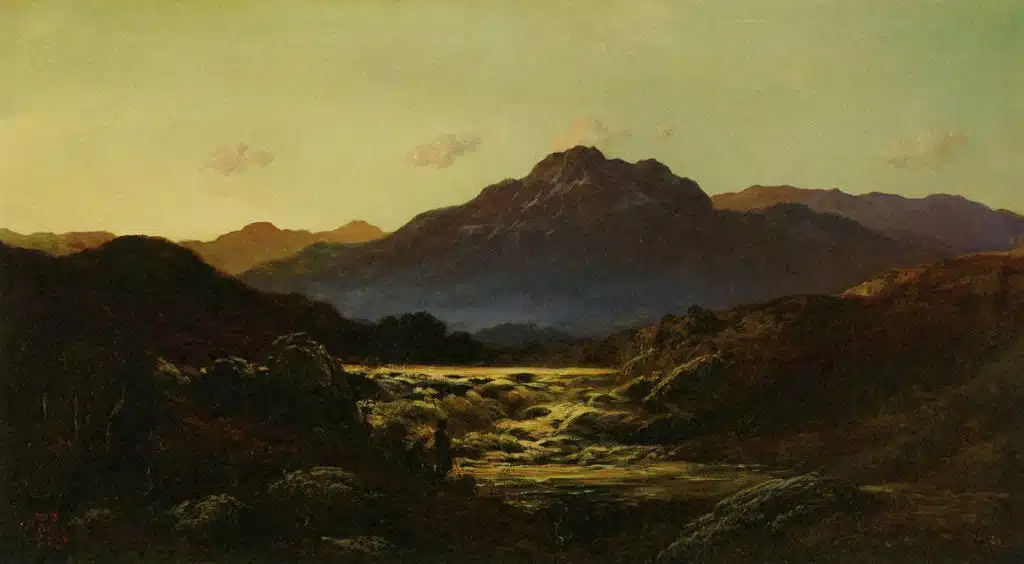
Torrent in the Hills
Year: c. 1875–1880
Technique: Oil on canvas
A wild and dramatic landscape, likely inspired by his travels to Scotland or the Alps, showcasing the raw power of nature.
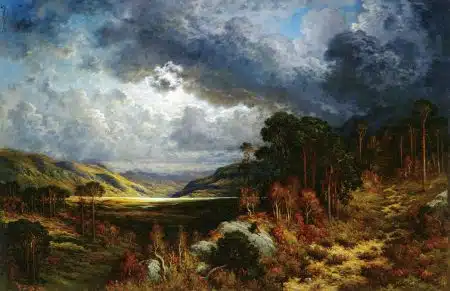
Souvenir of Loch Lomond
Year: 1875
Technique: Oil on canvas
One of his most famous Scottish landscapes, capturing the romantic, misty atmosphere of the Highland loch.
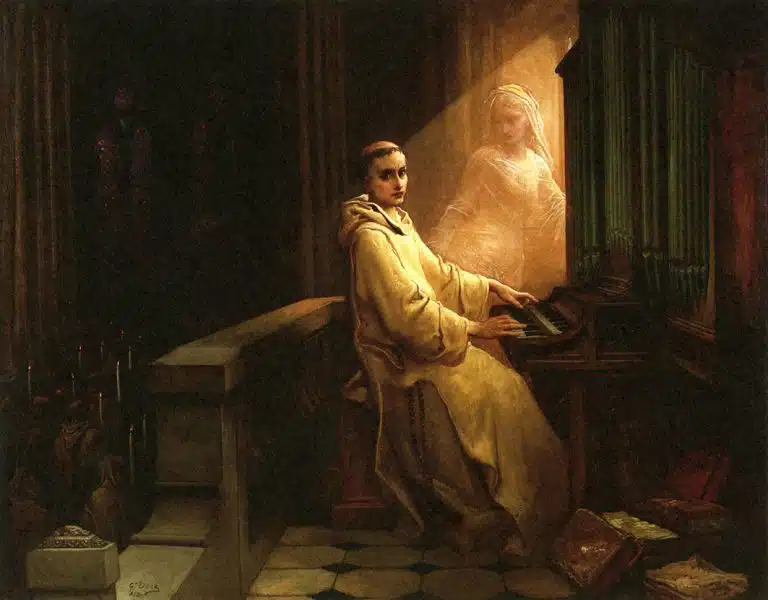
The Monk’s Daydream
Year: c. 1865
Technique: Oil on canvas
A genre painting depicting a monk in a moment of introspection, often interpreted with a touch of satirical anticlericalism.
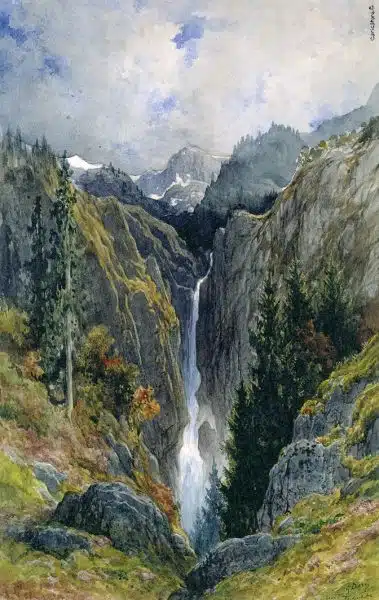
Waterfall at the Mouth of Hell
Year: c. 1877
Technique: Oil on canvas
A spectacular Pyrenean landscape painted during his travels, portraying the terrifying and sublime force of nature.
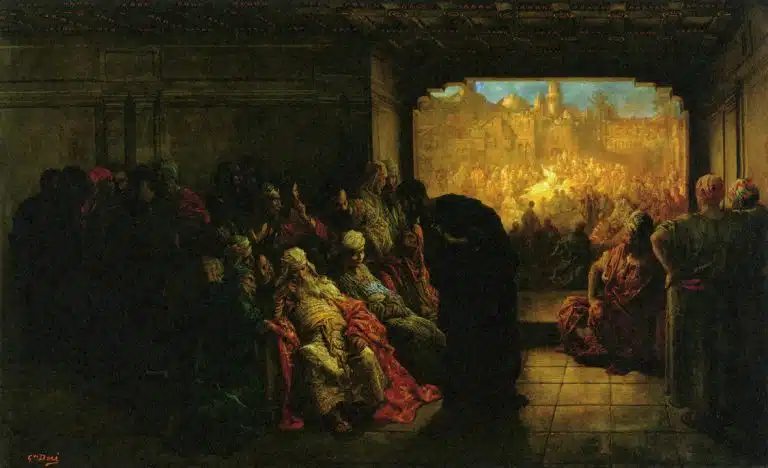
The House of Caiaphas
Year: 1866
Technique: Wood engraving
Illustration of the scene where Jesus is brought before the high priest Caiaphas, defined by intense chiaroscuro.
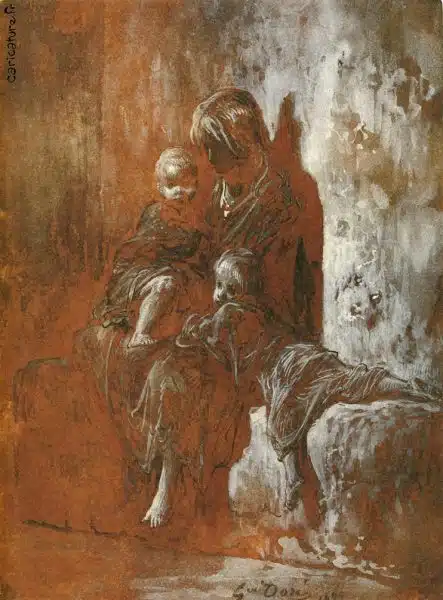
London’s Poor
Year: 1872
Technique: Wood engraving
A poignant scene showing an impoverished family in the streets of London, a prime example of his social realism.
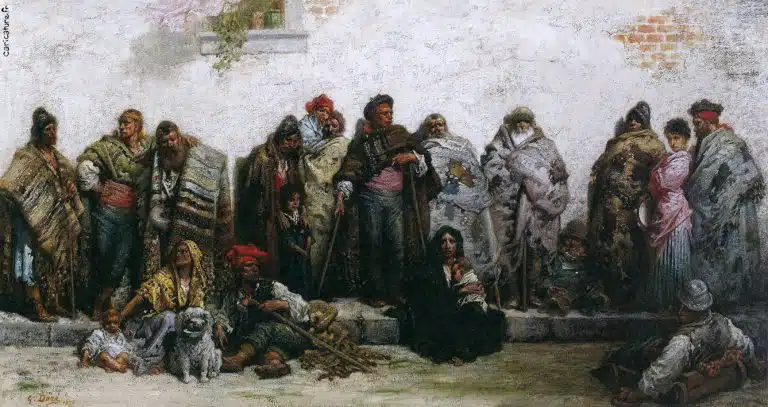
Beggars of Burgos
Year: c. 1862
Technique: Drawing / Engraving
A street scene observed during his travels in Spain, capturing daily life and poverty with an empathetic realist style.
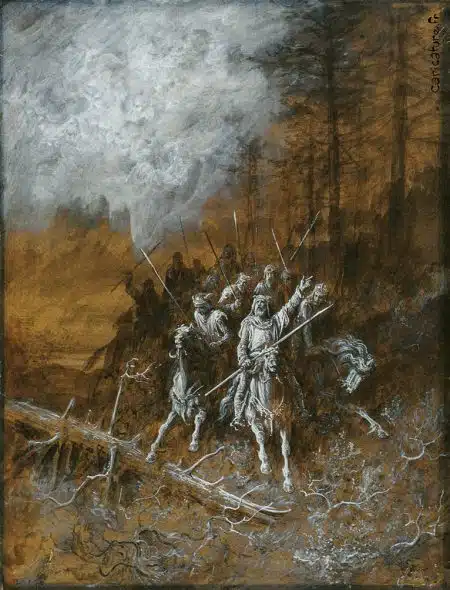
The March of the Knights
Year: c. 1877
Technique: Wood engraving
Epic illustration showing an army of Crusaders on the move, an example of his grand historical compositions full of motion.
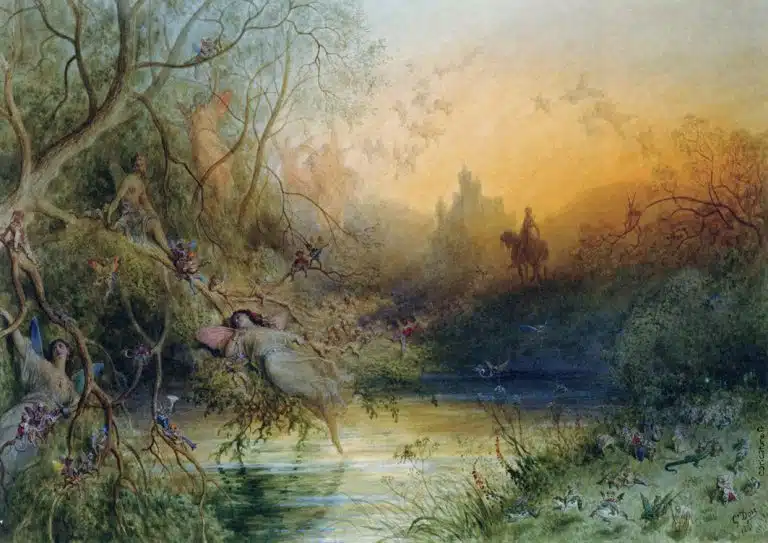
Fairyland
Year: c. 1881
Technique: Oil on canvas
A dreamlike, fairy-tale painting showing his deep interest in the fantastic and the imaginary beyond his book illustrations.
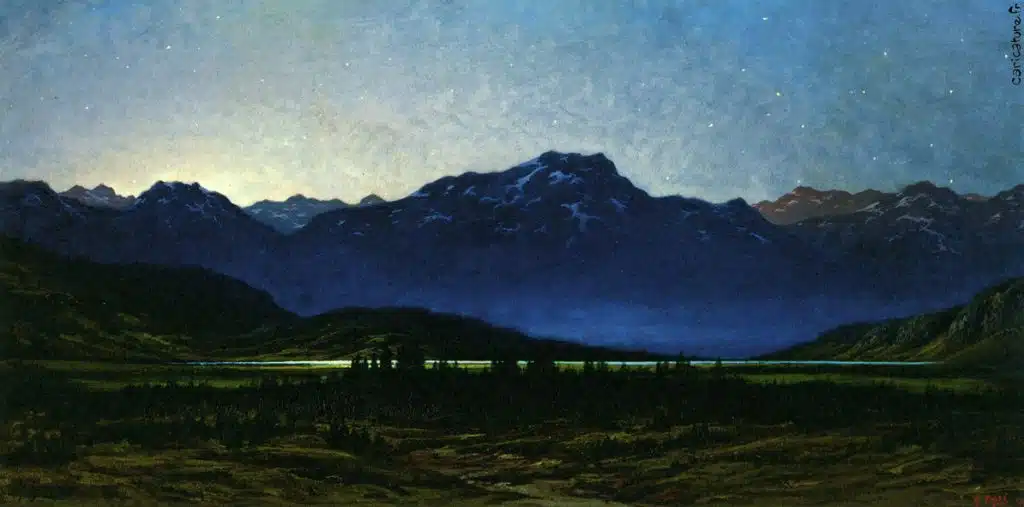
Mountain Landscape
Year: c. 1870–1880
Technique: Oil on canvas
A generic title for his many works depicting the grandiose landscapes of the Alps or Scotland, which he loved to visit.
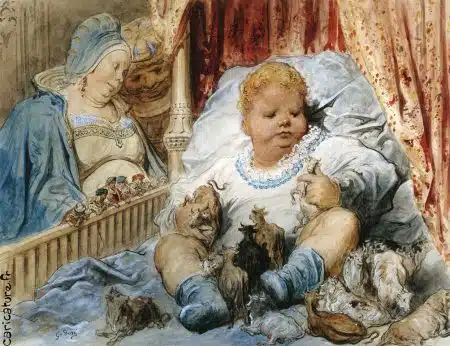
The Childhood of Pantagruel
Year: 1854
Technique: Wood engraving
Illustration for Rabelais’ work, showing the young giant Pantagruel in a scene full of humour and energy.
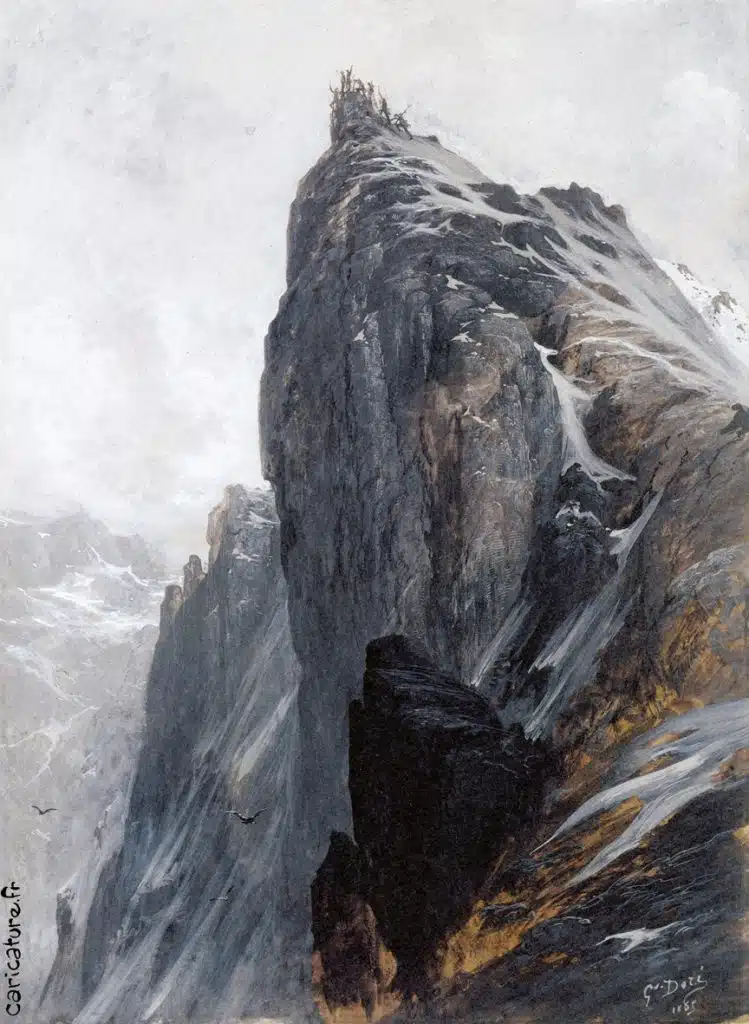
The Ascent of the Matterhorn
Year: 1865
Technique: Wood engraving
Illustration for the account by mountaineer Edward Whymper, depicting the tragic accident during the first ascent of the Matterhorn.
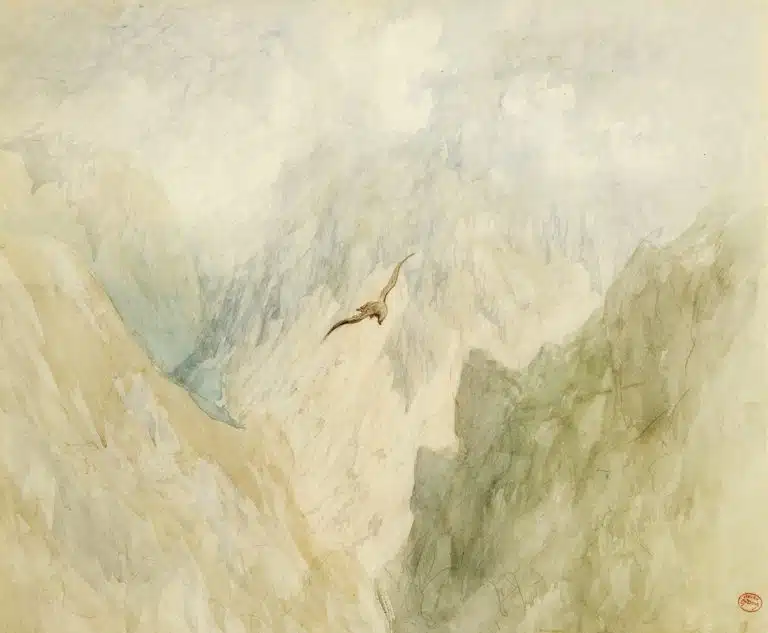
The Pyrenean Eagle
Year: c. 1877
Technique: Oil on canvas
A majestic painting of an eagle dominating a Pyrenean landscape, symbolising freedom and the power of wild nature.
Want to learn more? Explore my caricature encyclopedia
The life of a man in a hurry
Doré spent his life wanting to be regarded as a painter. Illustration made him famous, and that frustration explains a great deal — including the landscapes you have just seen.
Born in Strasbourg on 6 January. He drew before he could write properly and never received real formal training.
Arriving in Paris at fifteen, he walked into the office of Charles Philipon, publisher of the Journal pour rire. He walked out with a three-year contract. At an age when most people are sitting exams, he was already a professional caricaturist.
His works for Rabelais. Giants, feasts and unapologetic grotesque: his style burst fully into view, and he was only twenty-two.
Dante’s Inferno. No publisher believed in it — a book too large, too expensive, too dark. Doré financed it himself. The print run sold within weeks, and Hachette came asking for the sequel.
The years of glory followed one another: Perrault’s Tales, Don Quixote, then the Bible. His images became the ones the whole world associated with these texts, to the point that cinema still borrows from them.
Dismissed by French critics who refused to take him seriously as a painter, he opened his own gallery in London. The British public came in crowds.
Publication of his great book on London, made with journalist Blanchard Jerrold. To prepare it, he explored the poorest districts at night under police escort. These are the plates shown above: sandwich men, a family on the pavement, the train cutting through poverty.
He died in Paris on 23 January, aged fifty-one, exhausted by a pace of work that no one has ever matched. He is buried at Père-Lachaise.
More than 100,000 works in thirty-five years. And the final irony: the man who dreamed of official gallery walls ended up inventing a visual grammar that the first filmmakers borrowed without naming him.