Francisque Poulbot
Who was Francisque Poulbot and how did he immortalise the children of Montmartre?
Francisque Poulbot (1879-1946) is the soul of Montmartre. A self-taught artist, he dove into the heart of popular Parisian life and found his favourite subject: street children. From this immersion, the “poulbot” was born — the archetype of the Parisian kid, cheeky, resourceful, and touching, a term that has since entered common French usage. Far from being sentimental, Poulbot’s drawing style was a powerful tool for social commentary, using the disarming logic of his characters to expose the hypocrisies of the adult world.
What are Poulbot’s most famous illustrations?
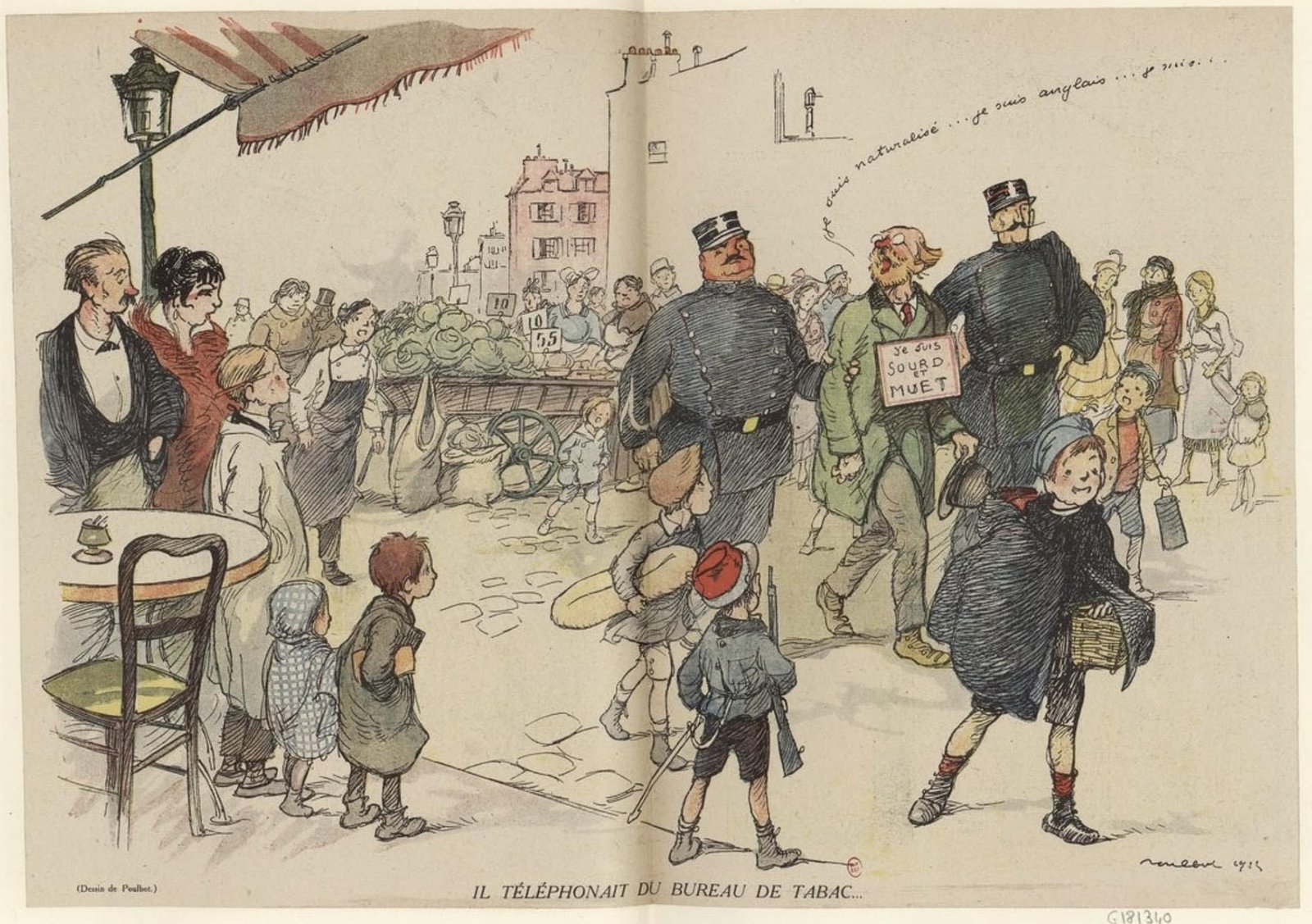
He was phoning from the tobacco shop
Propaganda drawing. A suspected spy is arrested under the approving gaze of Parisian children. 1916
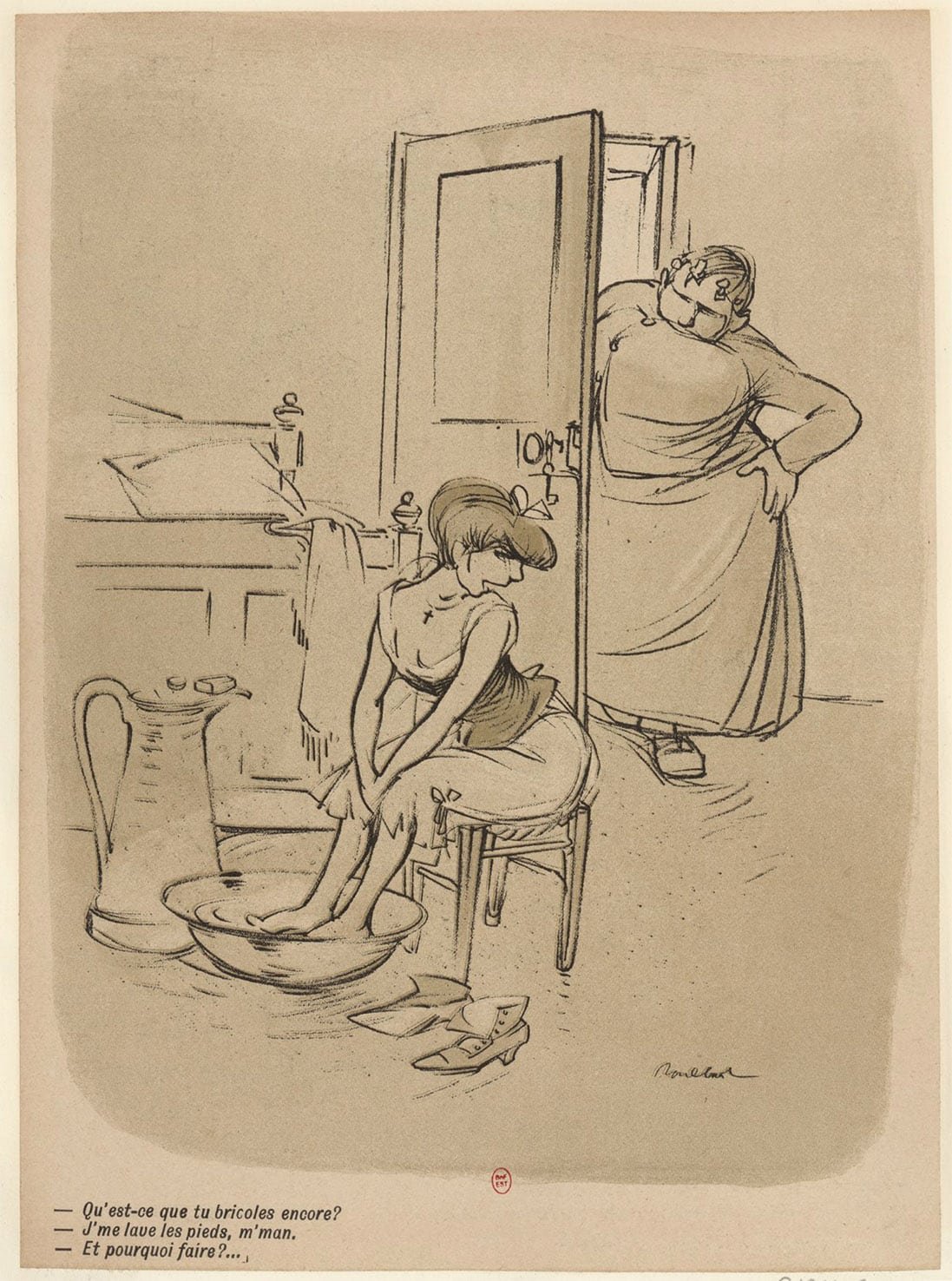
Parisian Urchin
‘I’m washing my feet, Mum!’
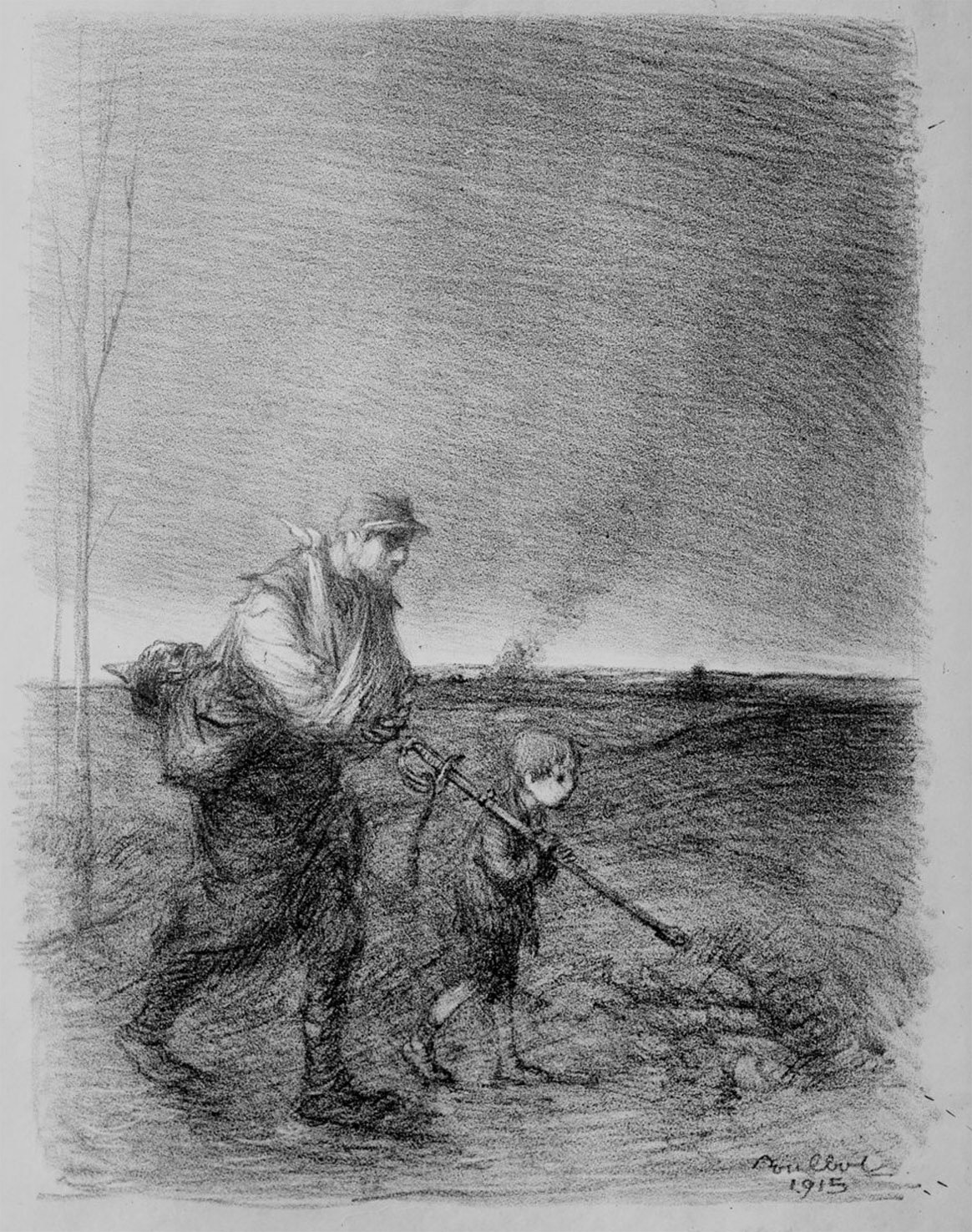
To the Rear – The Little Sword Bearer
Lithograph by Poulbot. A young boy plays soldier with his father’s sword. 1915
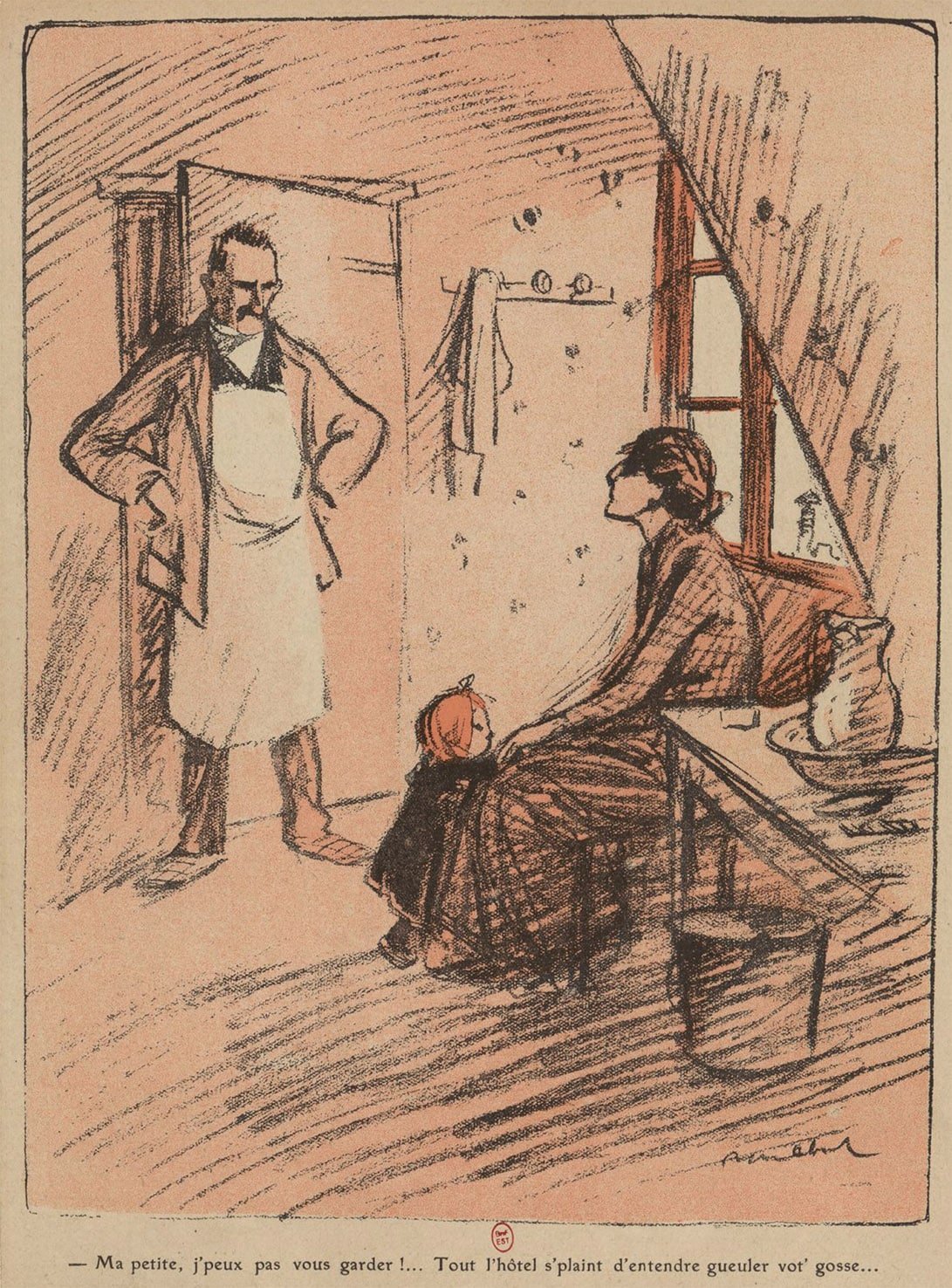
L’Assiette au Beurre – The Slumlord
Illustration for the satirical magazine L’Assiette au Beurre, depicting the life of poor children in Paris. 1910
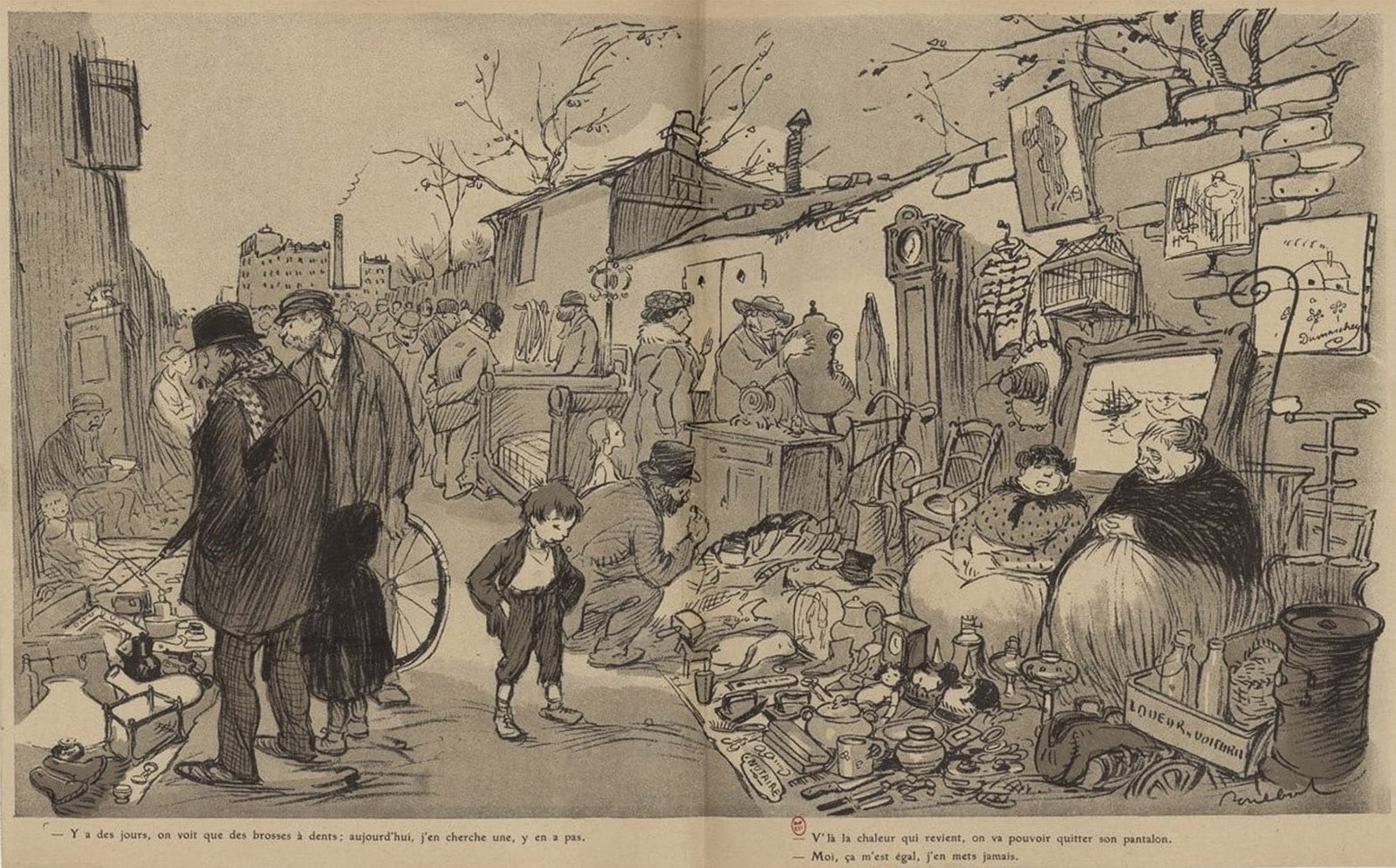
The Saint-Ouen Flea Market
L’Assiette au Beurre. Two children discuss their poverty, illustrating daily hardship.
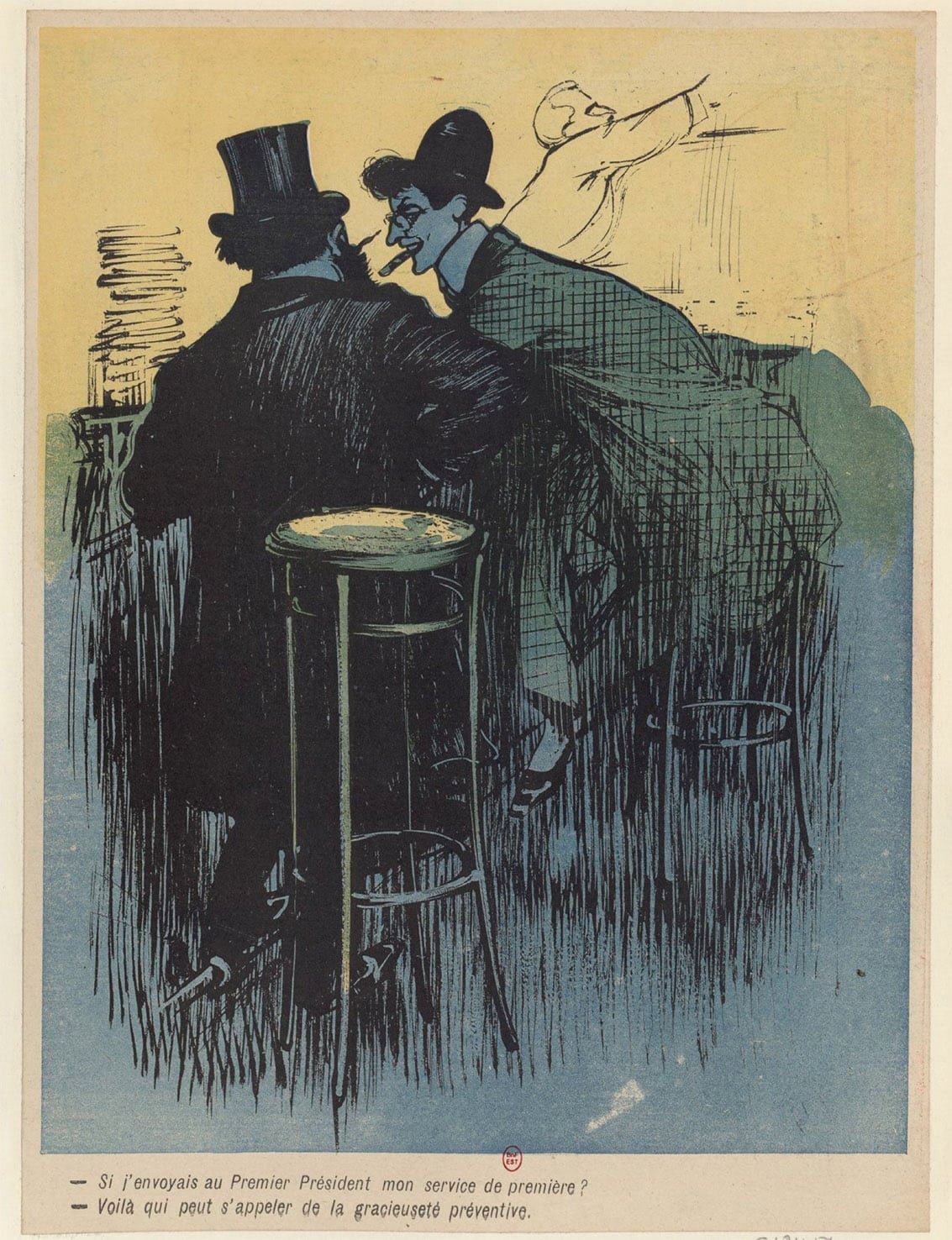
L’Assiette au Beurre n°111 – Journalists
Illustration for L’Assiette au Beurre critically satirising the world of journalism. 1903
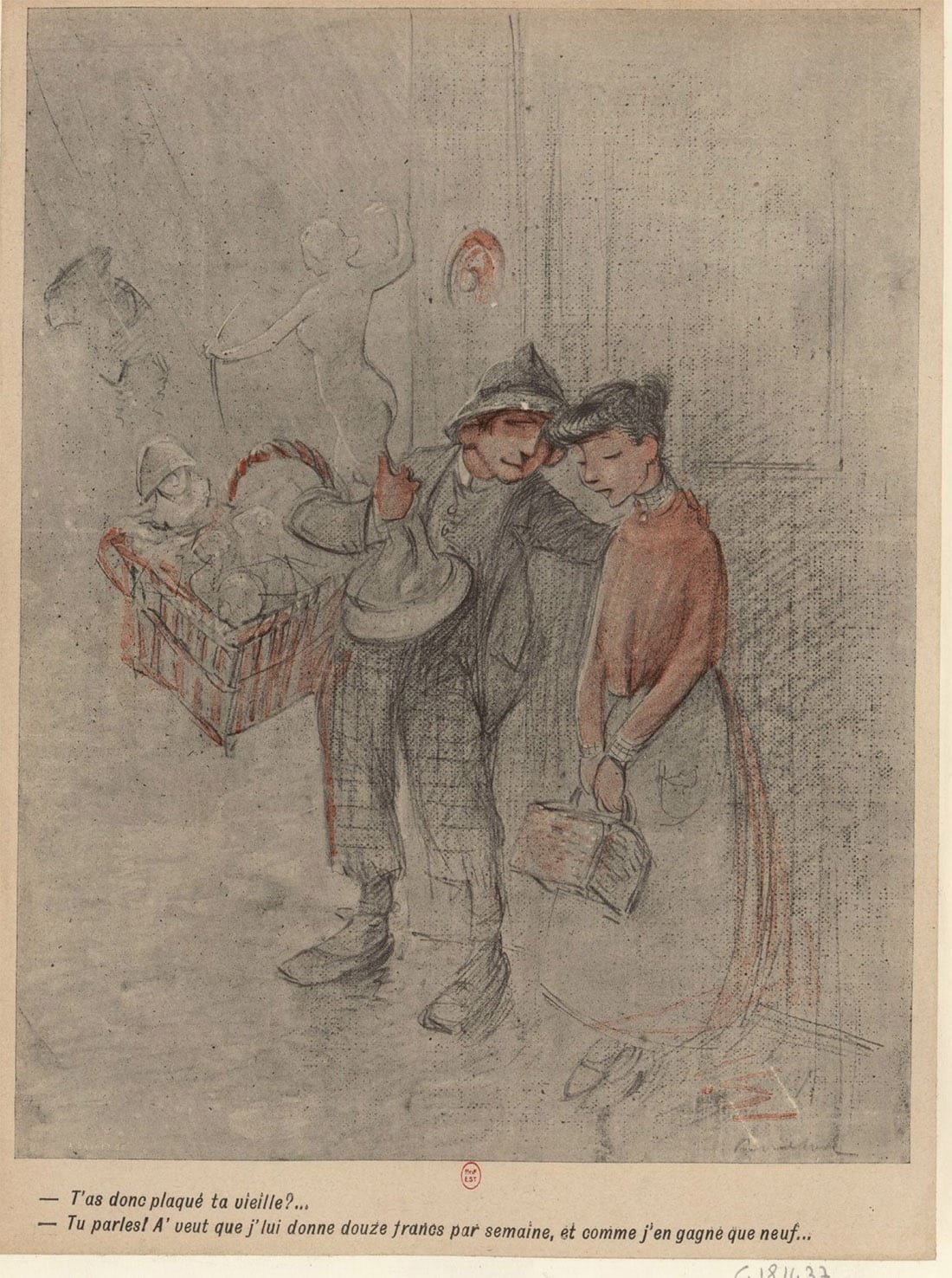
Parisian Titi
A typical ‘poulbot’, a street kid from Montmartre.
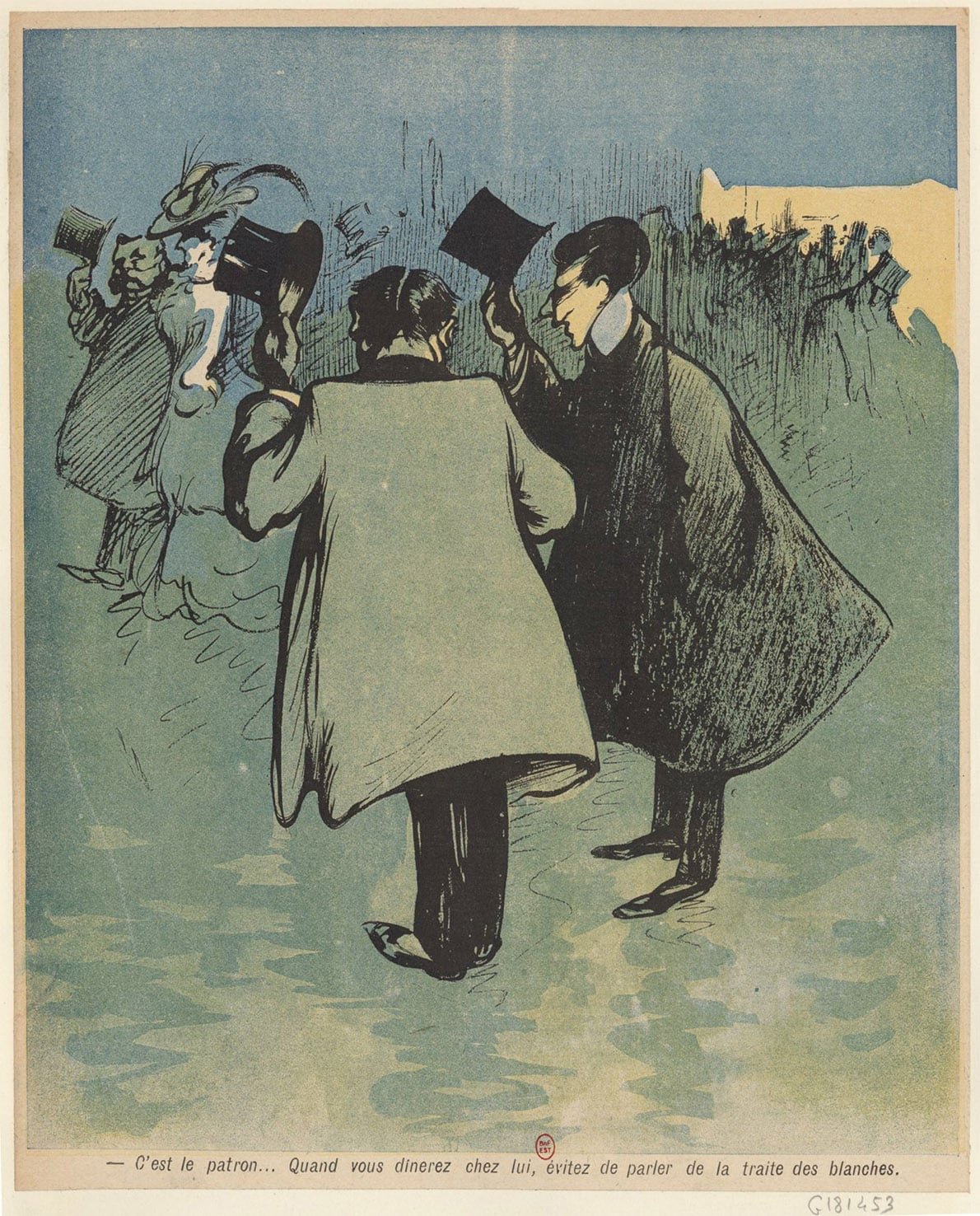
L’Assiette au Beurre n°111 – Journalists 2
Second illustration from the L’Assiette au Beurre issue on journalists. 1903
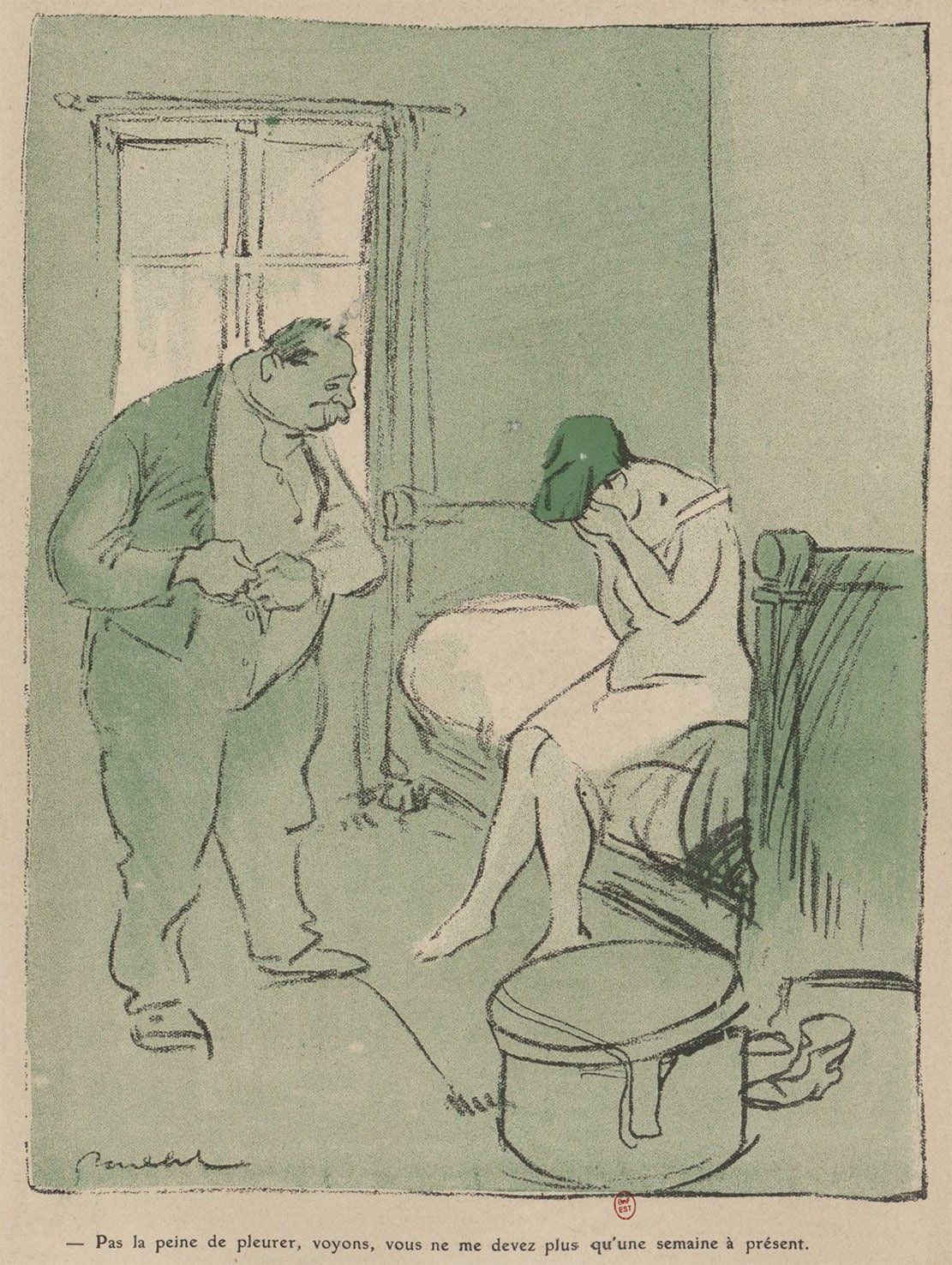
L’Assiette au Beurre – The Slumlord 2
A poor woman exploited by her landlord.
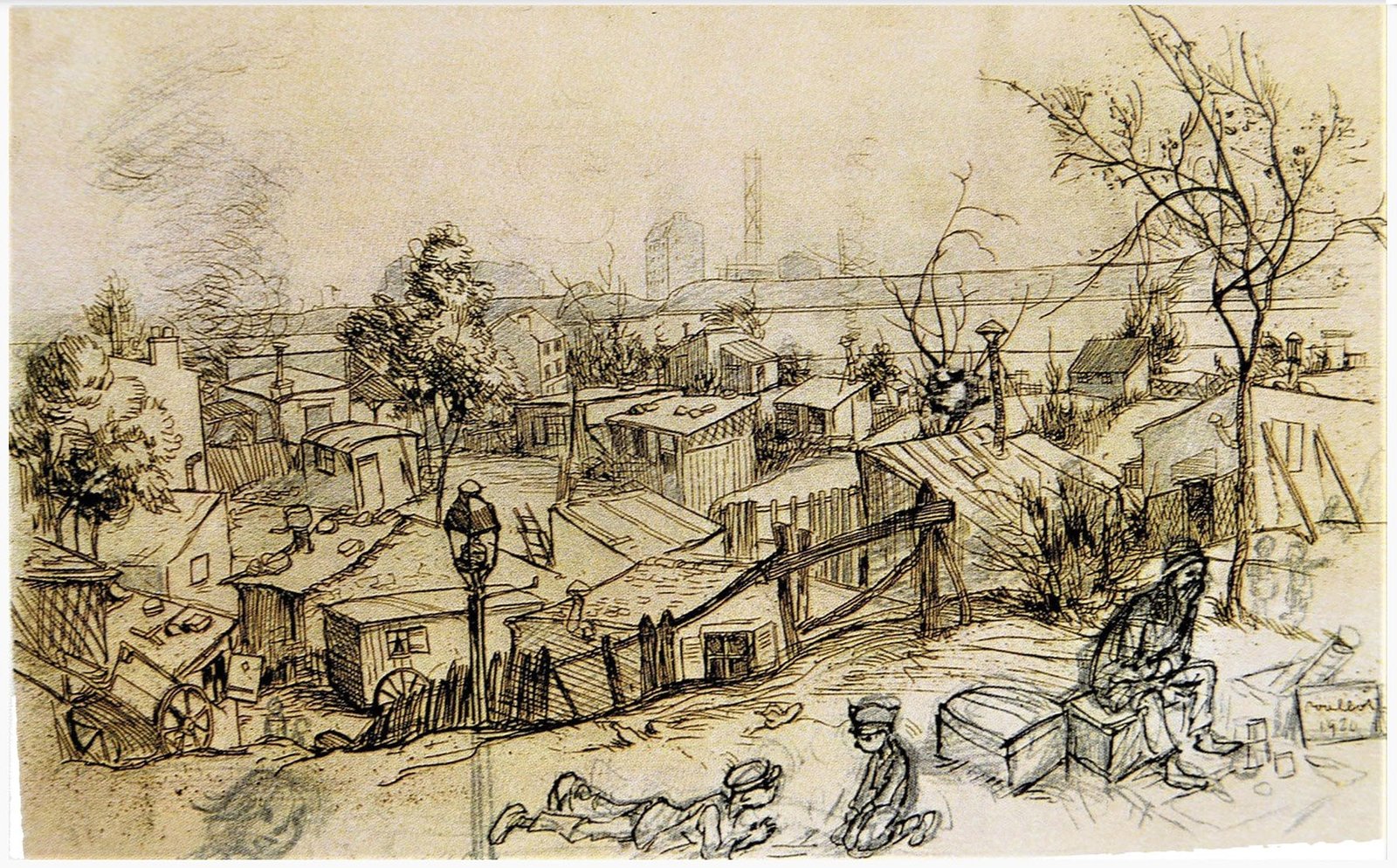
The Montmartre Shanty Town (Maquis)
Drawing of the ‘Maquis’, a Montmartre shanty town, capturing the poverty and environment of his ‘poulbots’.
With the outbreak of World War I, his art transformed, and the “poulbot” became a patriotic figure, embodying the resilience of the French nation. Deeply attached to the “Butte” (Montmartre hill), he was also a great benefactor, co-founding the “République de Montmartre” and establishing a health clinic to help the needy children he never stopped drawing.
To learn more, discover this moving documentary by the INA about Francisque Poulbot.
The Little Poulbots
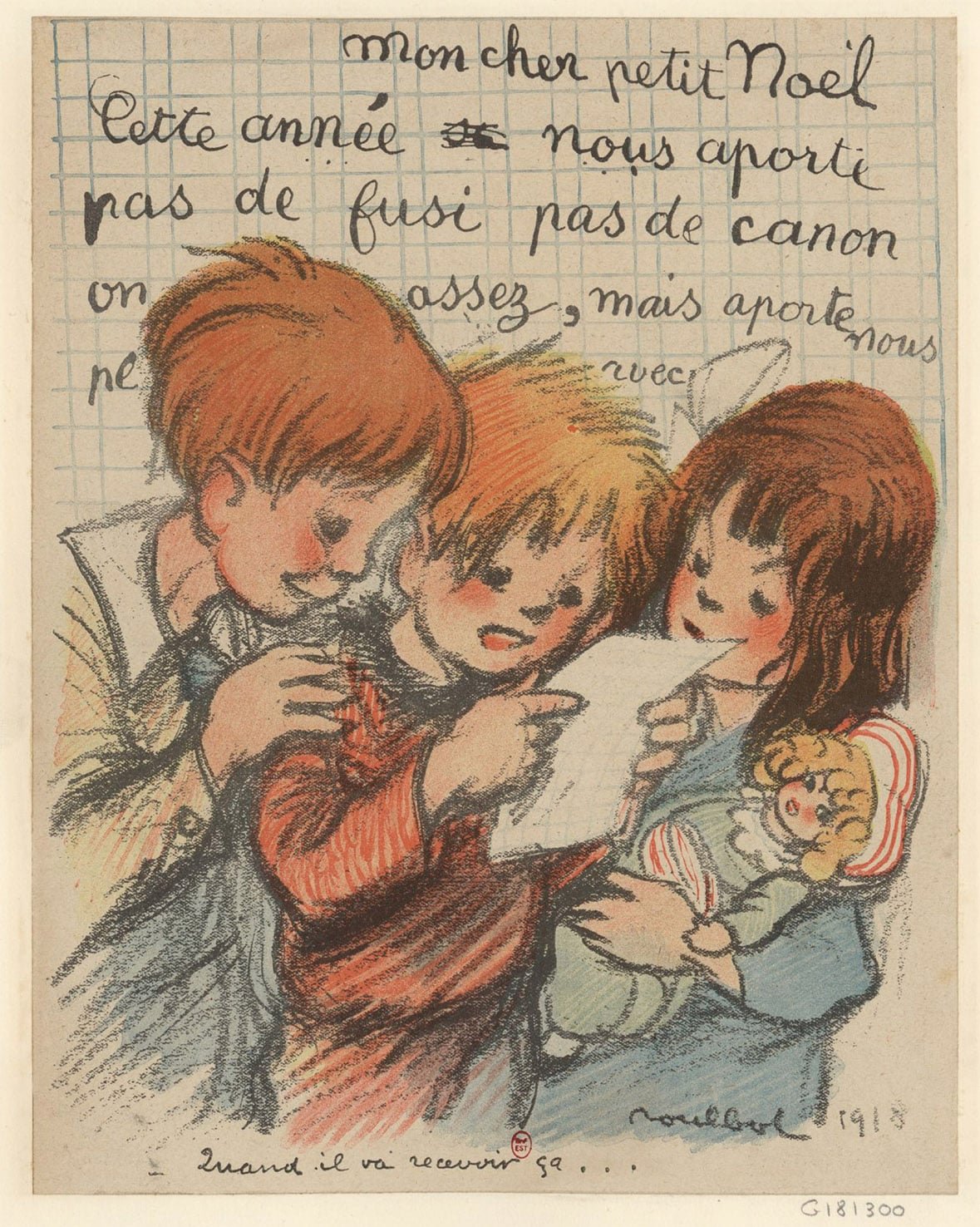
My Dear Little Santa
A child writing a letter to Santa Claus.
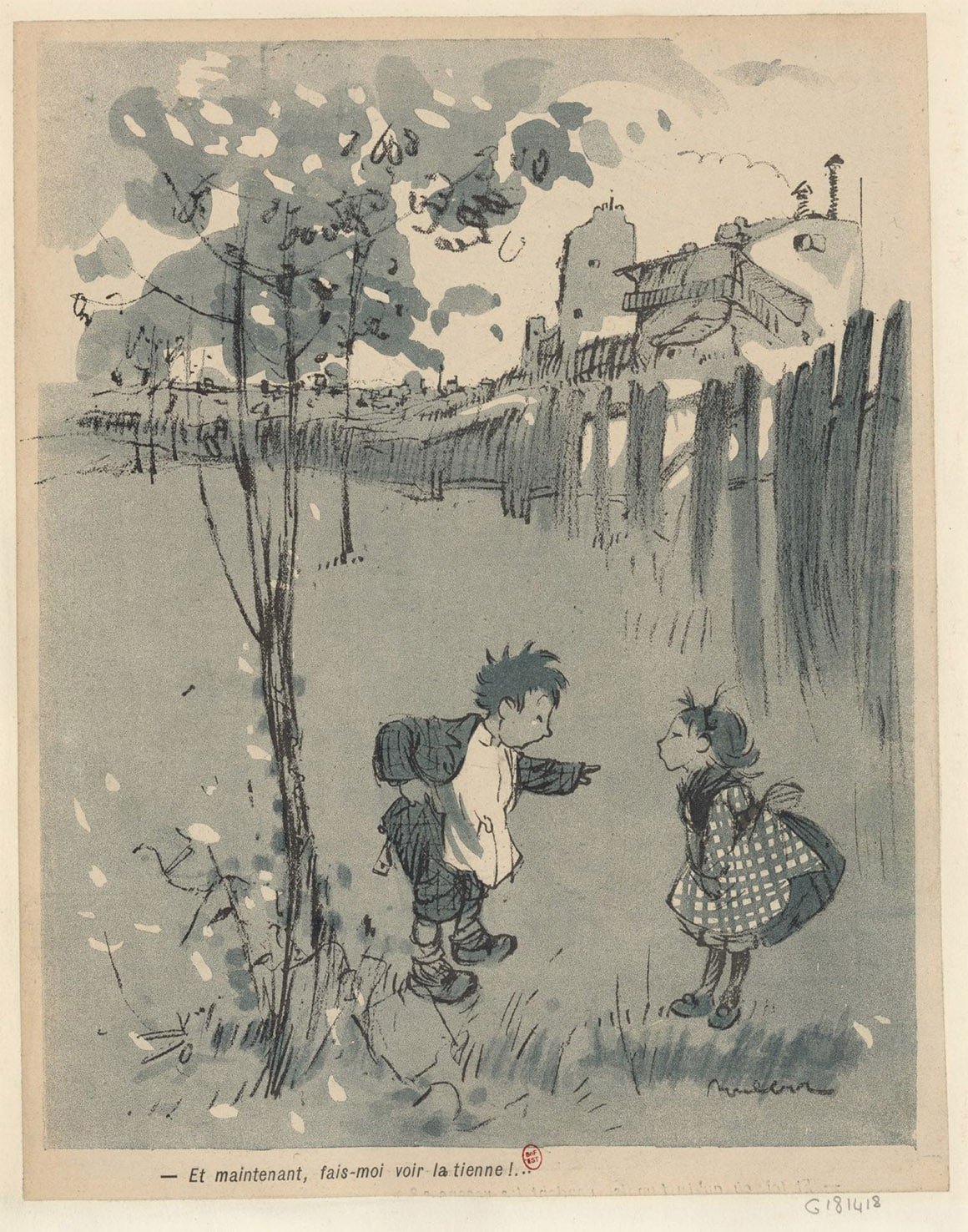
‘And now, show me yours!’
Poulbot’s illustration for L’Assiette au Beurre. Two children discussing social taboos. 1905
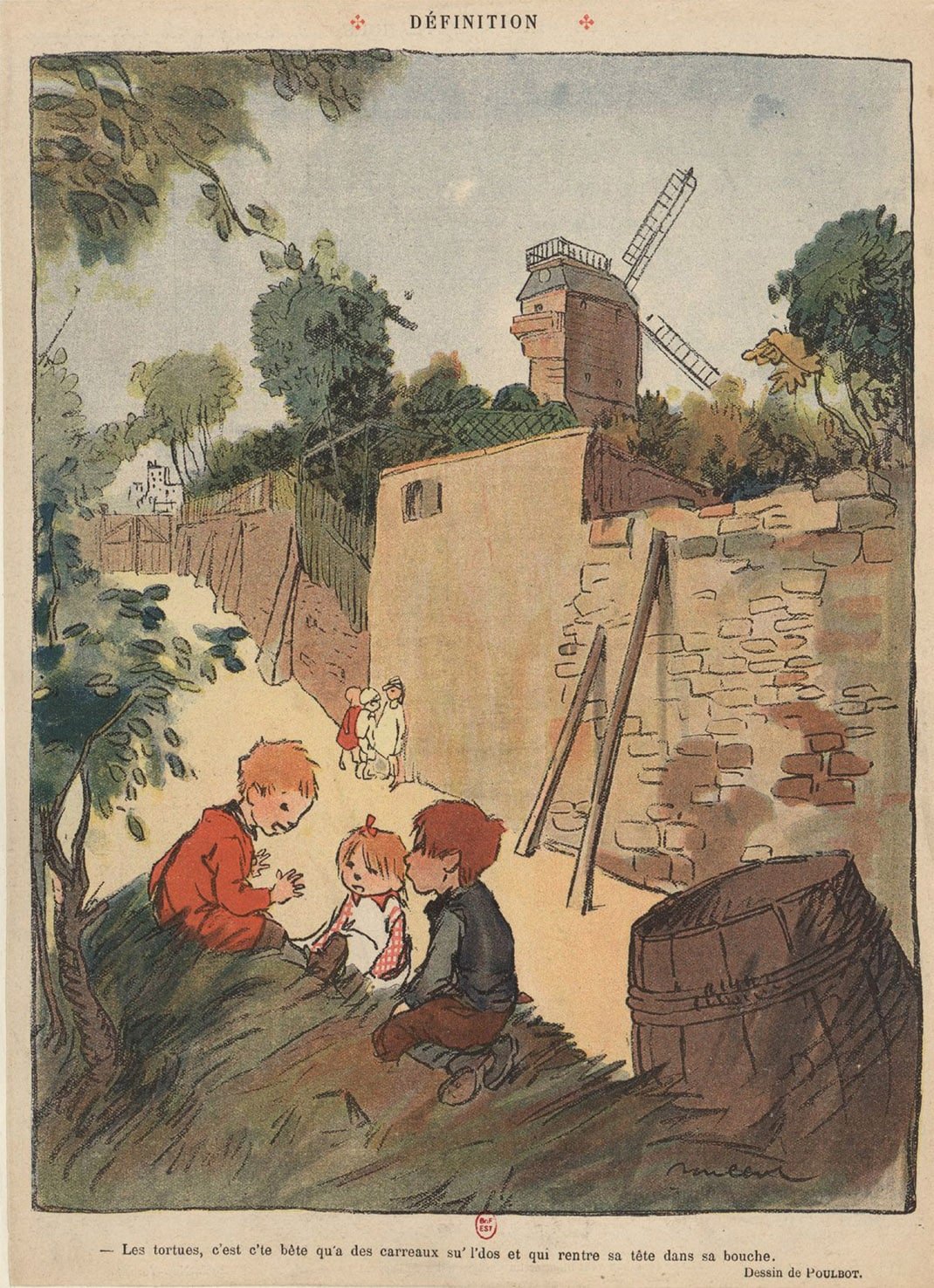
Definition of Tortoises
Satirical press clipping from 1910. Humorous illustration by Poulbot.
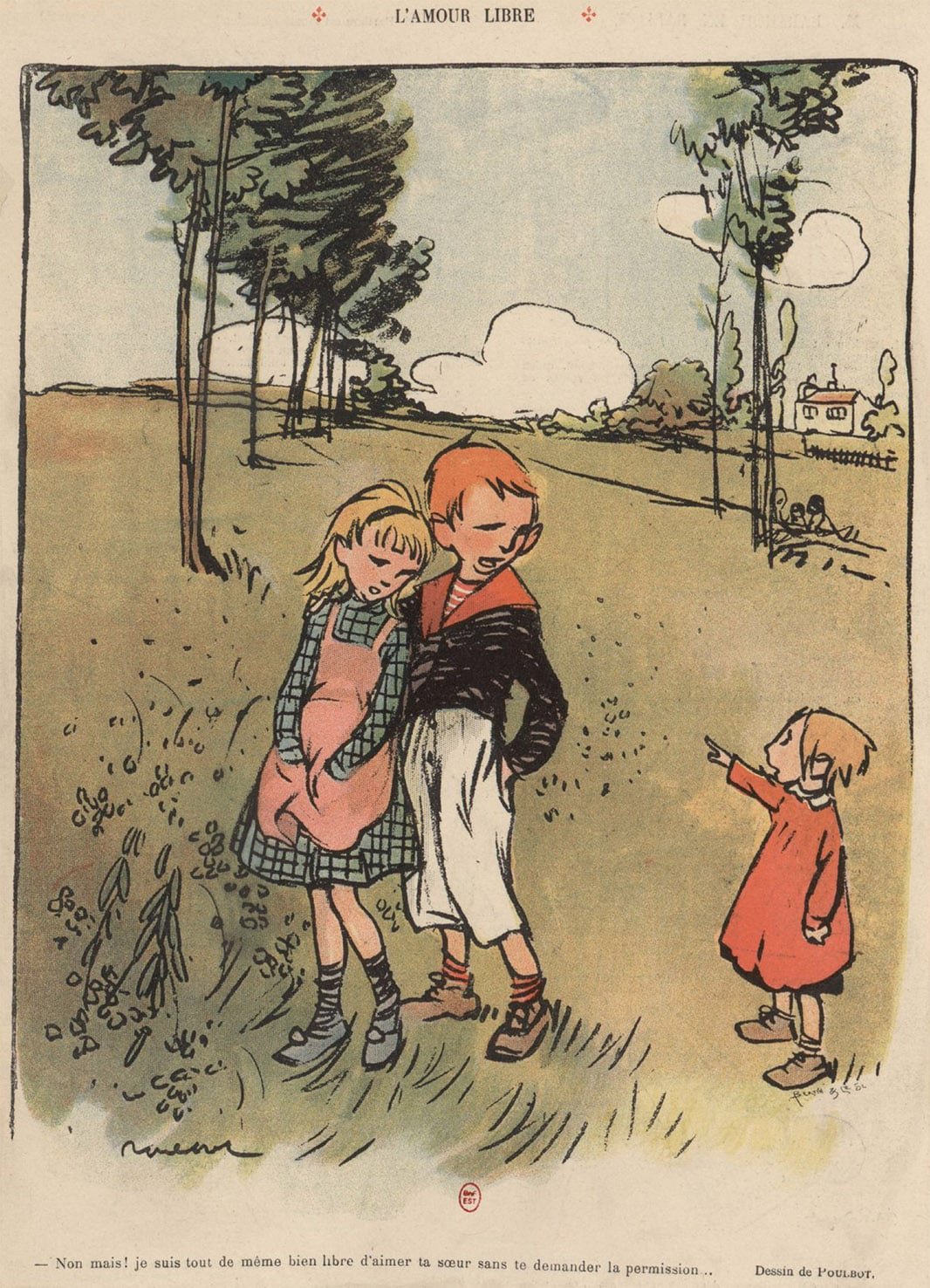
Free Love
Colour drawing by Poulbot for L’Assiette au Beurre
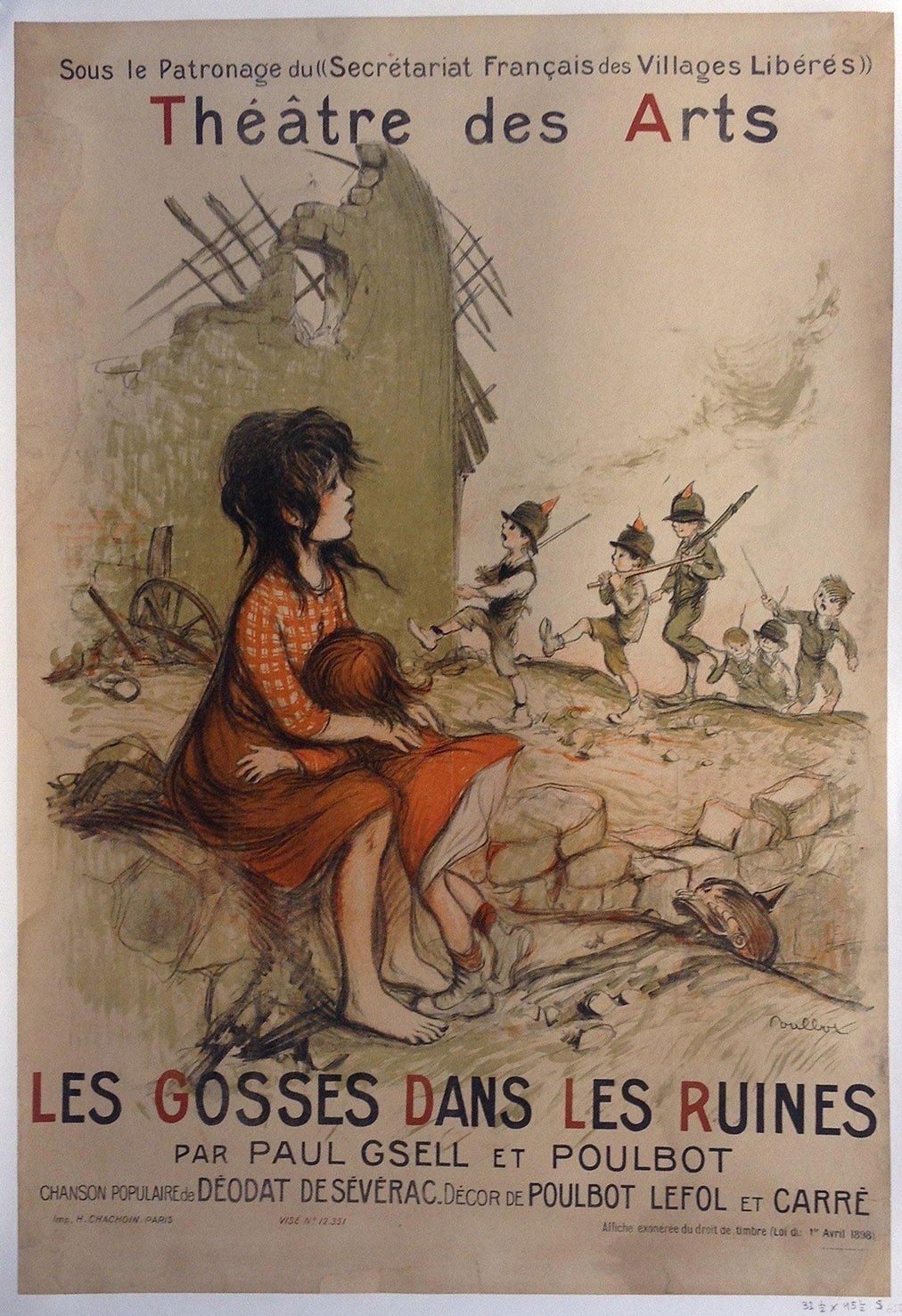
Théâtre des Arts – Kids in the Ruins
Poster for a play. Children playing in post-war ruins, evoking trauma and resilience. 1920
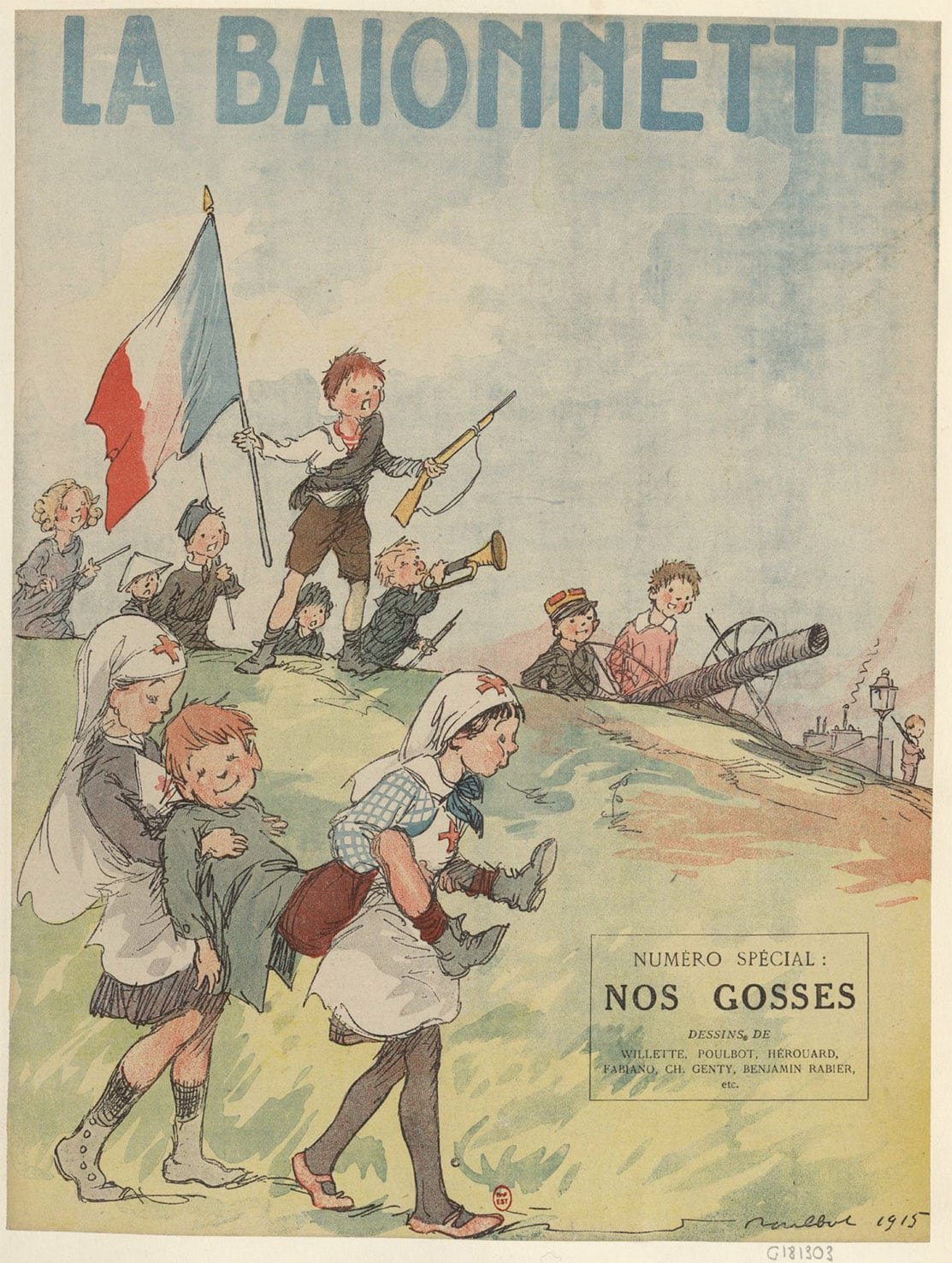
La Baïonnette
Propaganda illustration for the journal La Baïonnette, using humour to boost morale in wartime. 1915
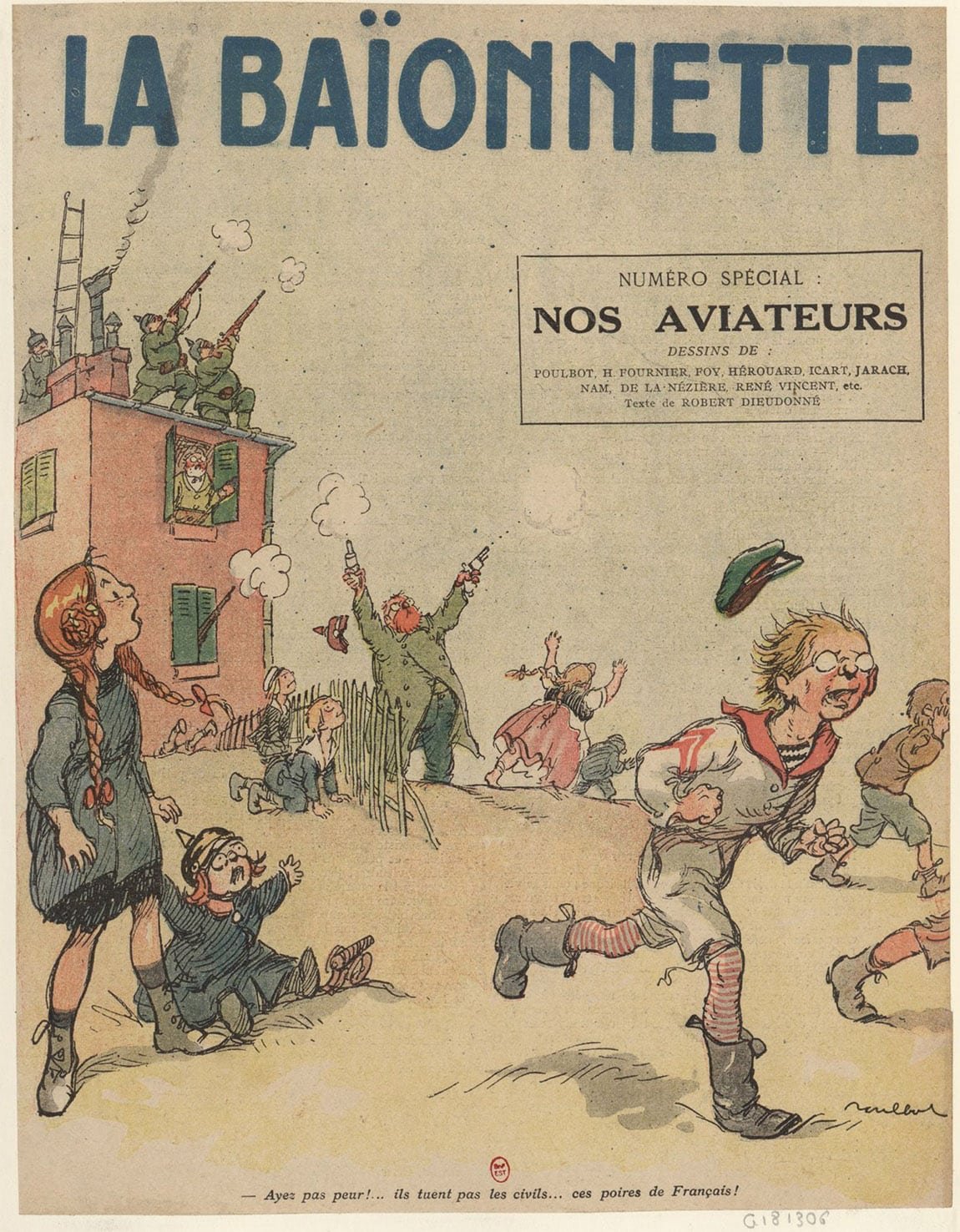
La Baïonnette – Our Aviators
Colour illustration by Poulbot for the journal La Baïonnette
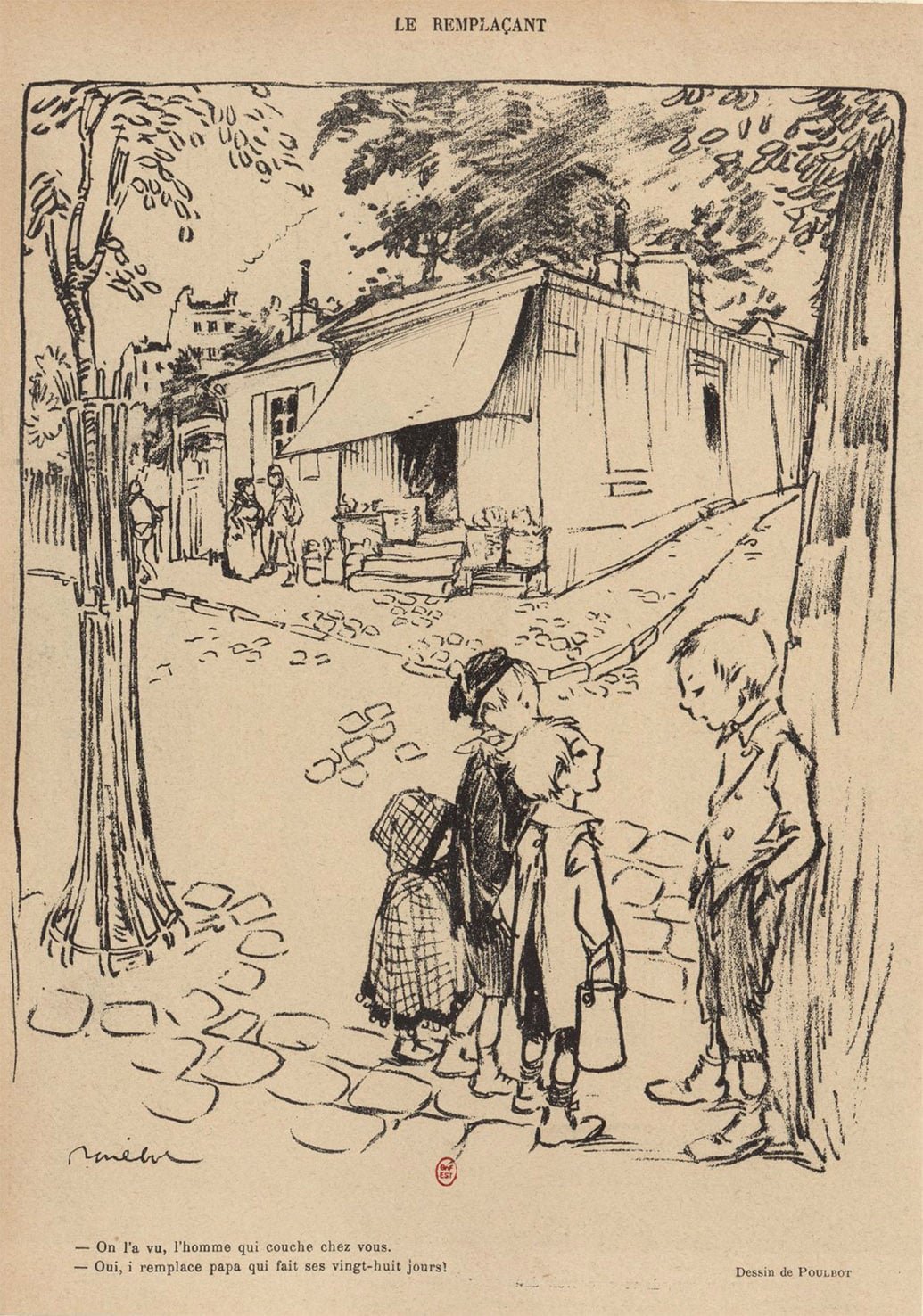
The Substitute
World War I print. A child symbolically takes his soldier father’s place.
In short: A French illustrator and poster artist, Francisque Poulbot (1879-1946) is world-renowned for his sketches of the underprivileged children of Montmartre (the famous “poulbots”). His lively stroke and social commitment left a lasting mark on 20th-century press cartooning.
Frequently Asked Questions
Who was Francisque Poulbot?
Francisque Poulbot (1879–1946) was a French illustrator and poster artist, self-taught, who became world-famous for his drawings of the street children of Montmartre in Paris. The word ‘poulbot’ entered the French language as a common noun meaning a Parisian urchin. He was also a committed social philanthropist who co-founded the République de Montmartre and set up a free health clinic for the neighbourhood’s poor children.
What does the word ‘poulbot’ mean?
A ‘poulbot’ is a common French noun, derived directly from Francisque Poulbot’s name, meaning a Parisian street urchin or ragamuffin — specifically the kind of cheeky, resourceful, tenderly poor child associated with the Montmartre neighbourhood of Paris in the early 20th century. The word entered everyday French usage because Poulbot’s drawings made the type so recognisable.
Which newspapers and magazines did Poulbot work for?
Poulbot worked primarily for L’Assiette au Beurre, the major French satirical weekly, as well as Le Rire, La Baïonnette (during WWI), and various other French illustrated publications of the Belle Époque era. His illustrations for L’Assiette au Beurre are among the most powerful social documents of Paris in the 1900s and 1910s.
How did Poulbot’s work change during World War I?
During WWI, Poulbot’s ‘poulbot’ character became a patriotic symbol. The street urchin who had embodied social inequality now embodied the resilience and spirit of France under occupation. He produced propaganda illustrations for La Baïonnette using the same children’s perspective he had always used, but now directed at wartime subjects — with remarkable emotional power.
Where can I find out more about Francisque Poulbot?
The INA (Institut National de l’Audiovisuel) produced a documentary about Poulbot which is available online and gives an excellent account of his life and legacy. The Musée de Montmartre in Paris also holds a significant collection of his original works.
A life on the Butte
Poulbot did not merely draw the children of Montmartre. He fought for them, even when it cost him his own peace and quiet.
Born in Saint-Denis on 6 February, the eldest of seven children in a family of teachers. He drew very early and very well, but turned his back on the Beaux-Arts: he would never set foot there.
His first drawings appeared in the press. He moved up to Montmartre, then still a village of vineyards, shacks and wasteland — the famous Maquis shown above.
The years of L’Assiette au beurre. Under the cover of childhood, he attacked slumlords, landlords and journalists. His children said out loud what no adult would have dared to write.
He married Léona Ondernard in February, then went to the front. He was sent home the following year.
Posters, postcards and drawings for La Baïonnette: the “poulbot” became a national figure, the Paris kid who stood firm. These are the wartime images in the gallery above.
With his friends Willette, Forain and Neumont, he founded the Republic of Montmartre — an artists’ joke, but one that raised money for neighbourhood children.
He opened a dispensary on rue Lepic to treat needy children free of charge. It was no longer simply a matter of drawing them: it was a matter of feeding and caring for them.
His patriotic posters from the First World War were not forgotten. During the Occupation, the occupying authorities placed him under house arrest.
He died in Paris on 16 September. He is buried in Montmartre Cemetery, only a few hundred metres from the streets he spent his life drawing.
Few artists have had their name become a dictionary word. Today, “a poulbot” can mean any Paris street urchin — the man disappeared behind his characters, perhaps the loveliest fate that can befall a draughtsman.