The French Caricaturists
of the 19th Century
Robida drew the year 2000 from 1880. Caran d’Ache invented the wordless story. Roubille brought Art Nouveau to satire. 20 original works.
Who are the French caricaturists of the 19th century?
Robida, Albert (1848–1926)
Albert Robida was a visionary who, in his anticipation novels of the 1880s, imagined the future with astonishing precision. He predicted the téléphonoscope (a flat-screen videotelephony device), aerial bombardment, female emancipation, department stores, the decline of the horse and the rise of the car. He did all of this through caricature and satirical illustration. His most famous work, Le Vingtième Siècle: La Vie Électrique (1890), depicted life in 1955 with a satirical style that makes Jules Verne look cautious. Much more than a satirist, Robida was a civilisational prophet with a pen.
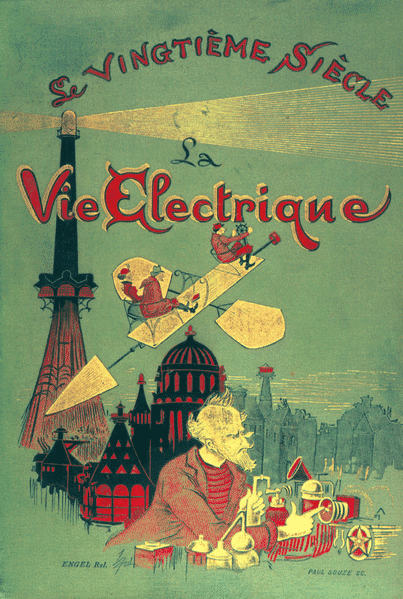
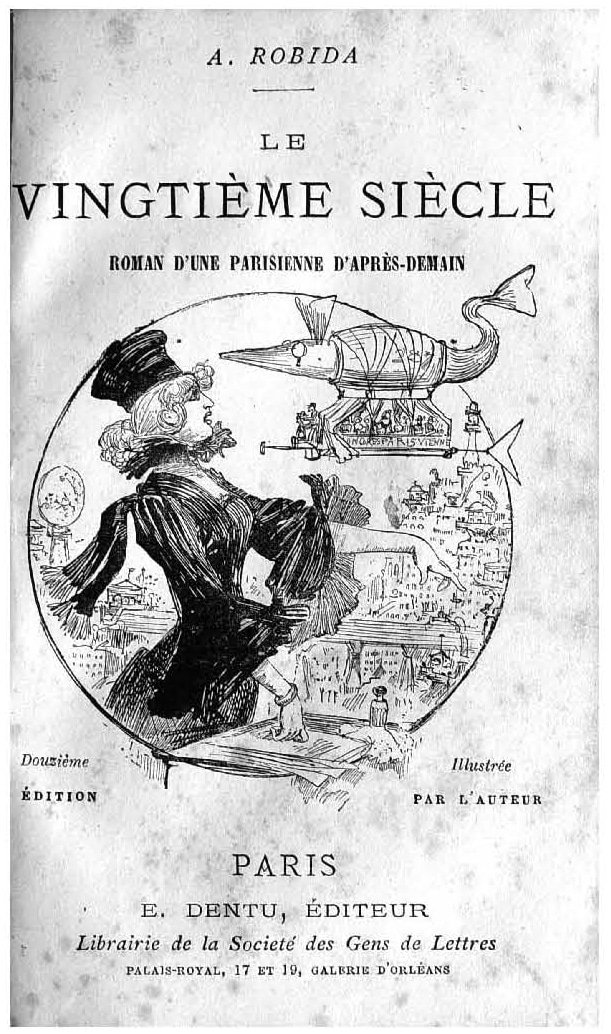
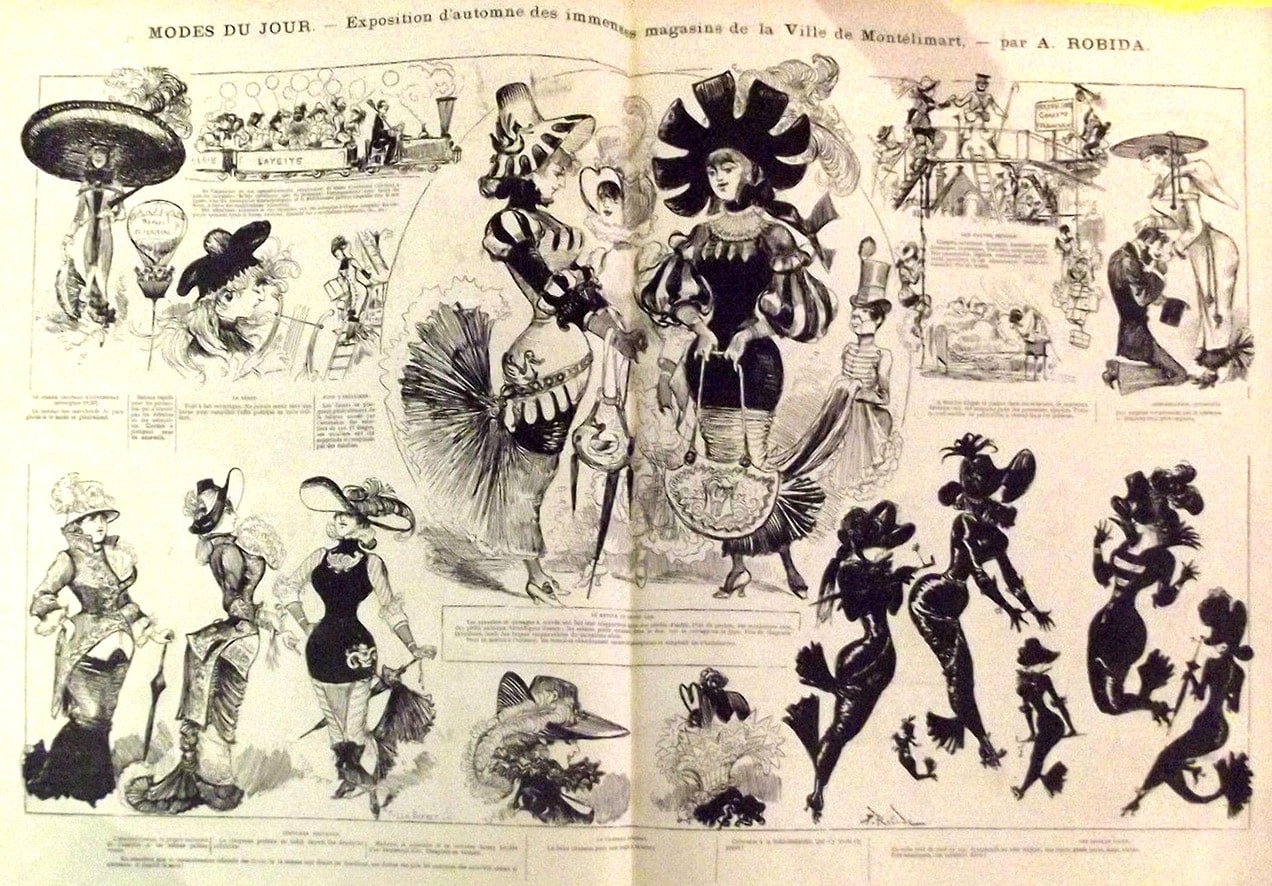
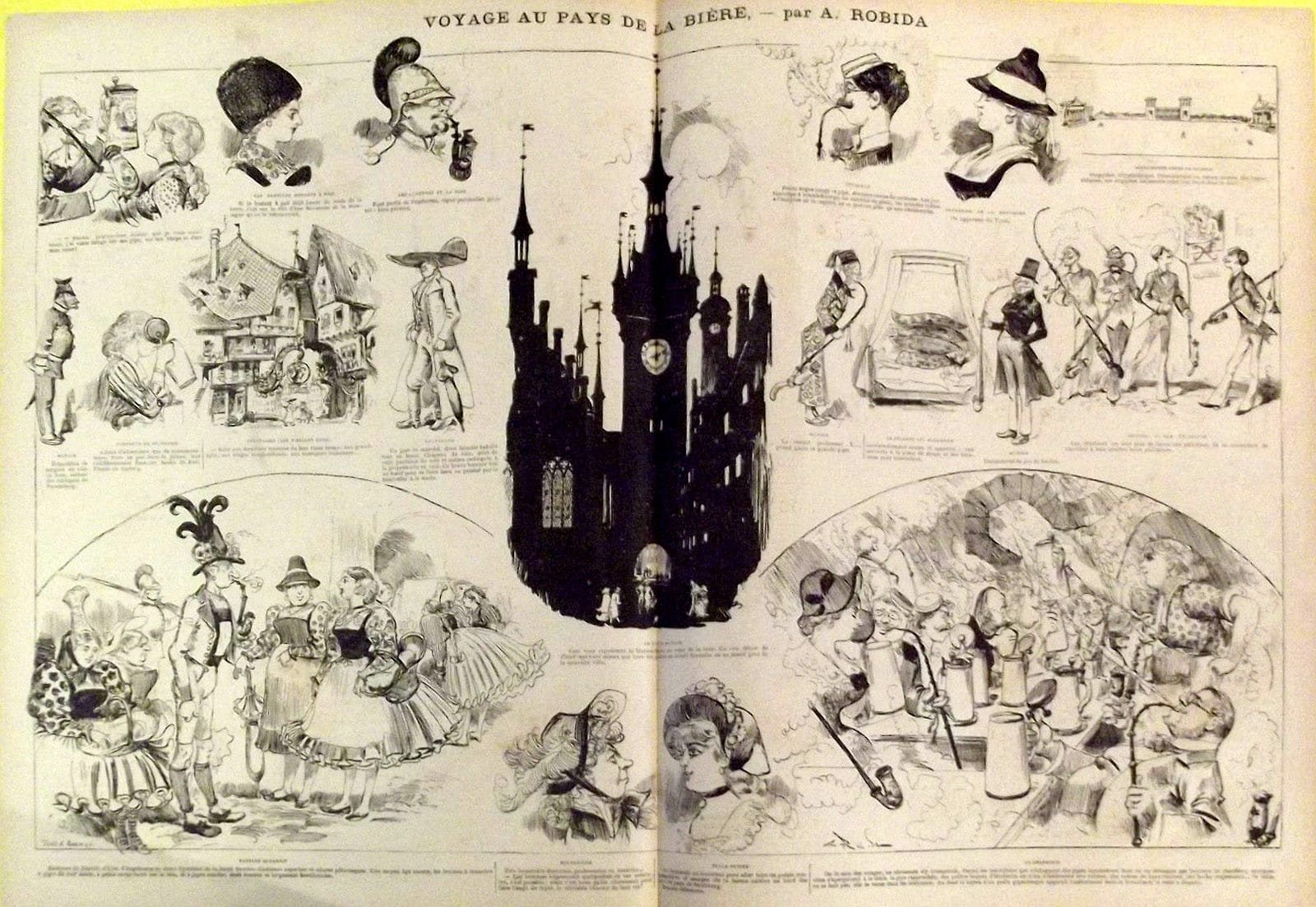
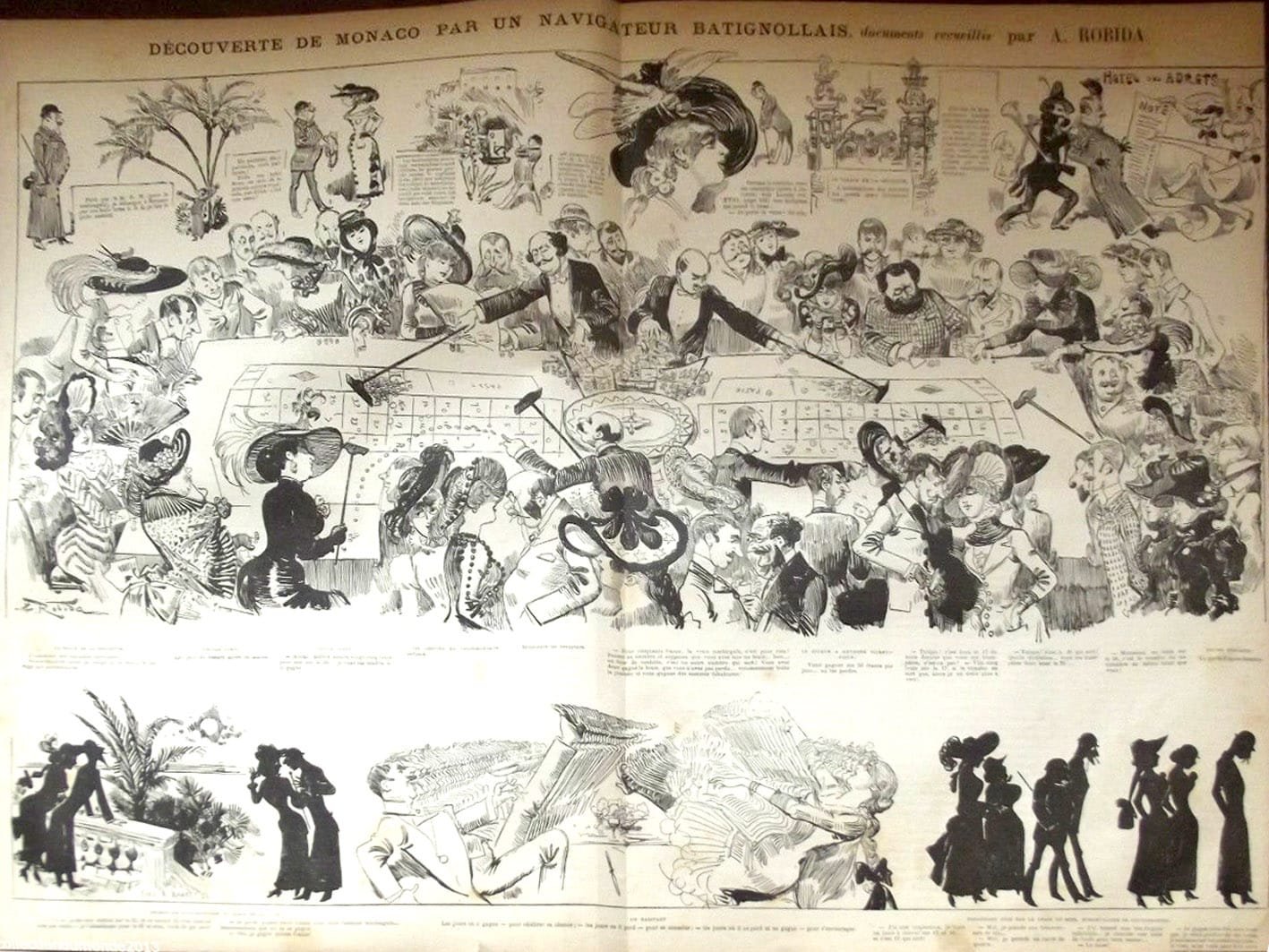
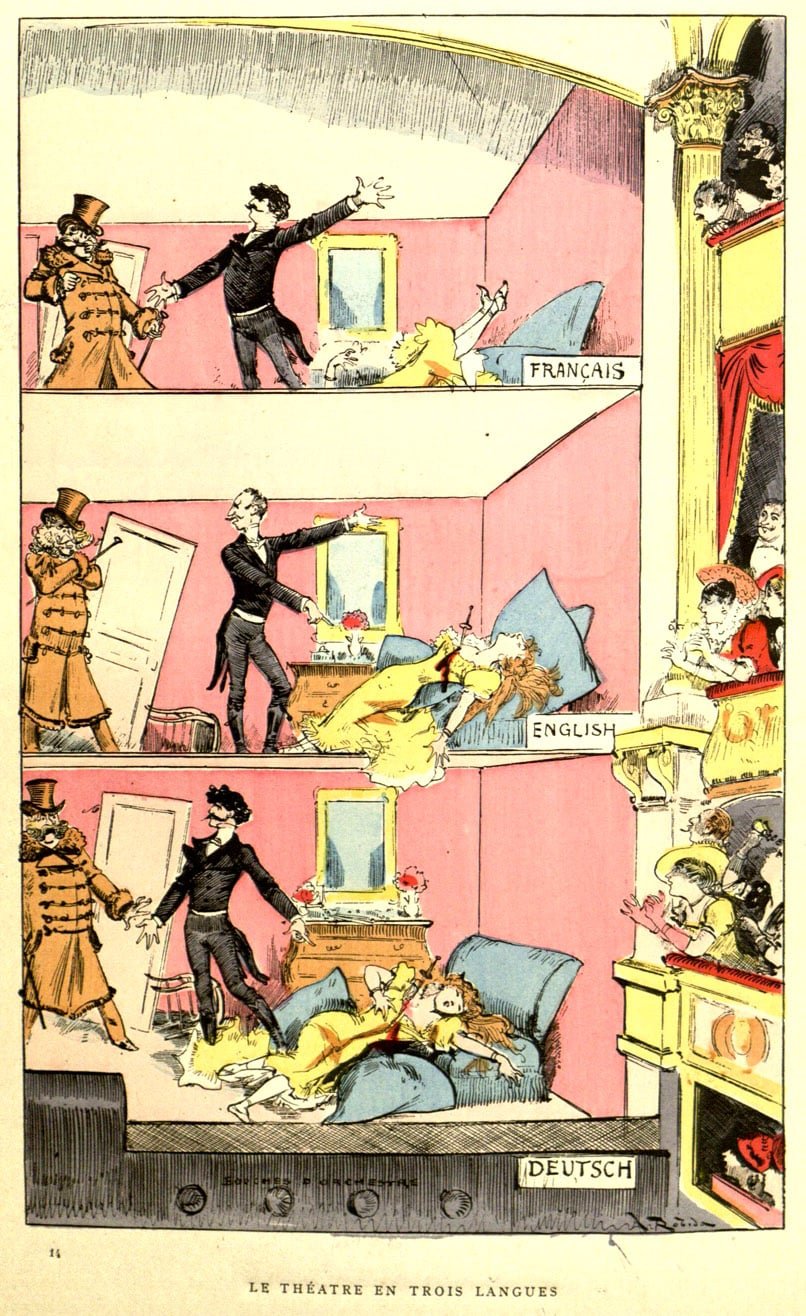
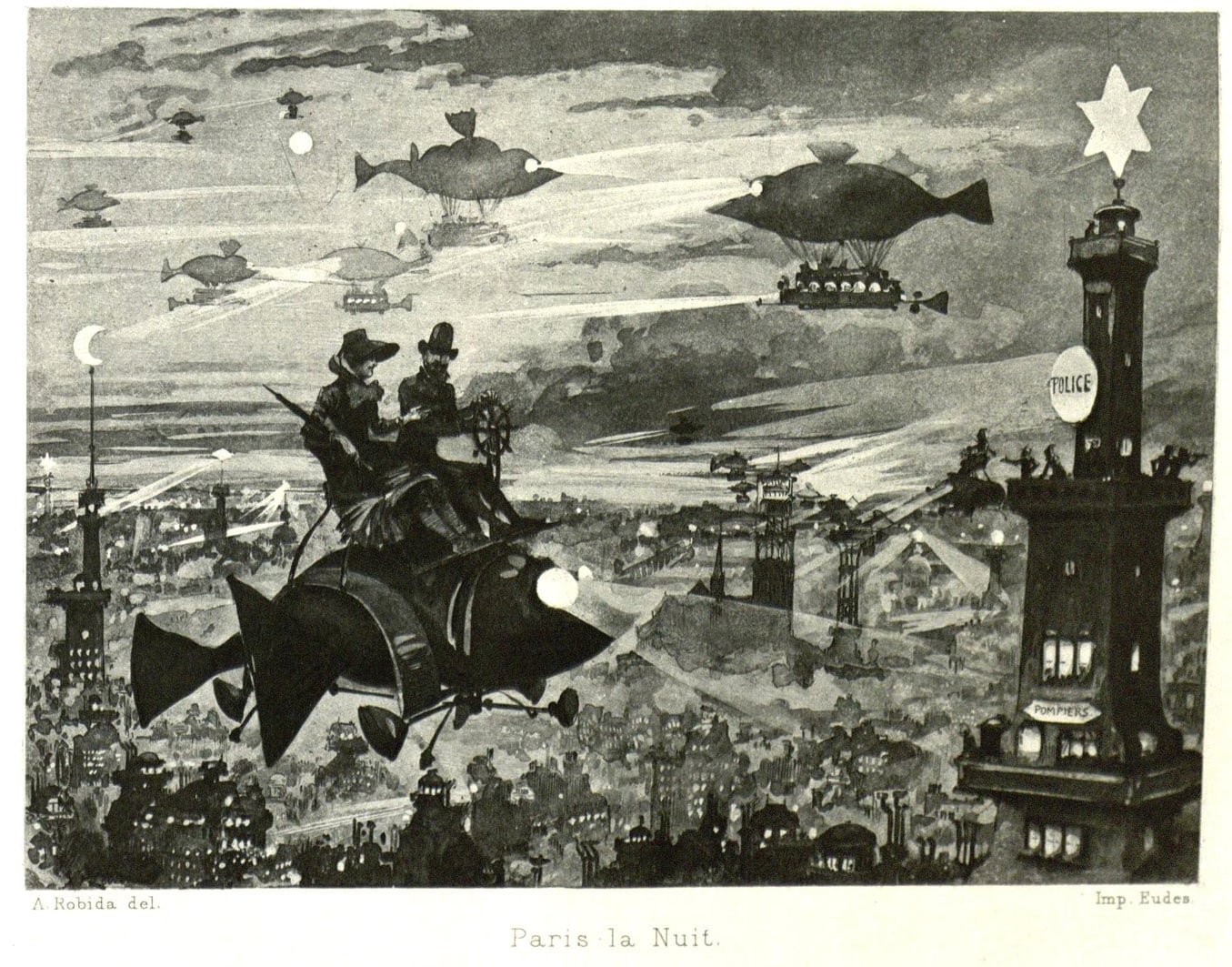
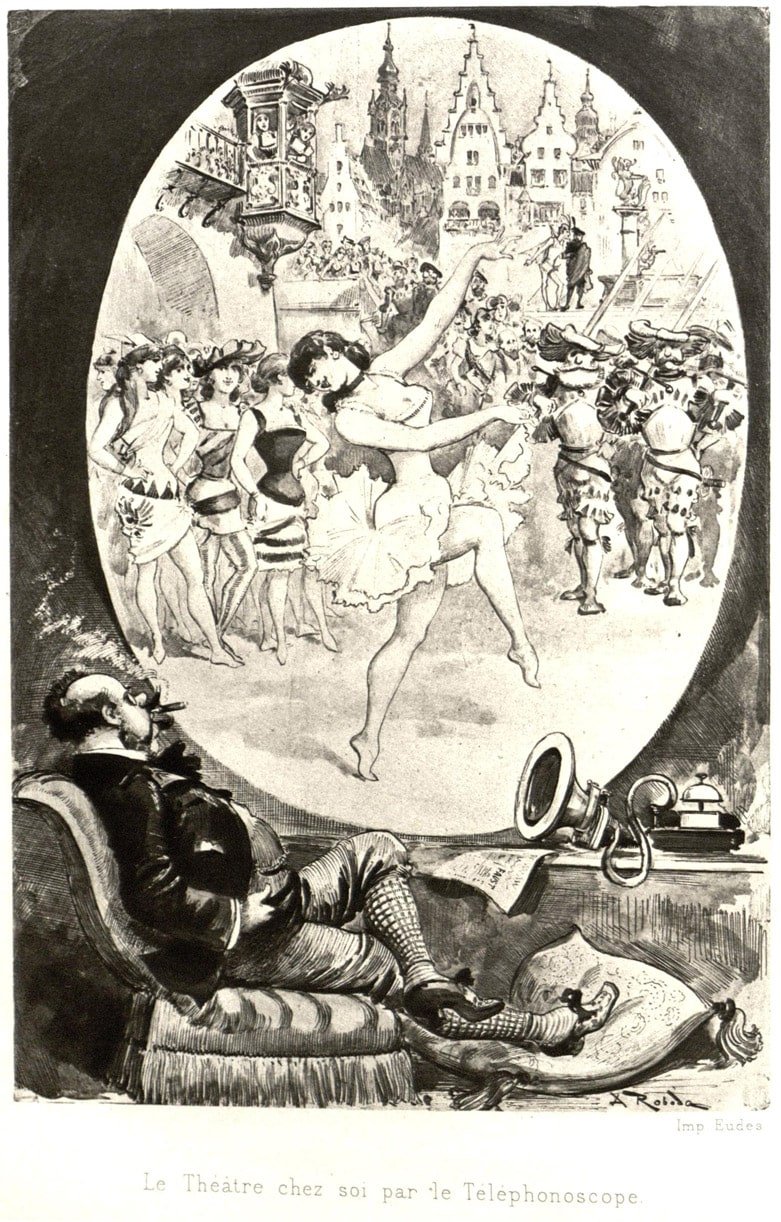
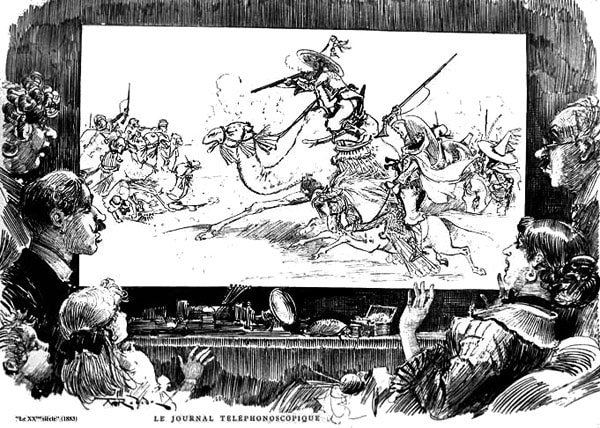
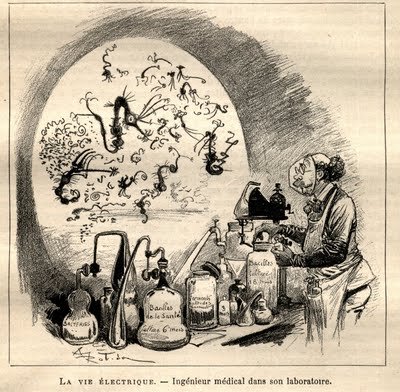
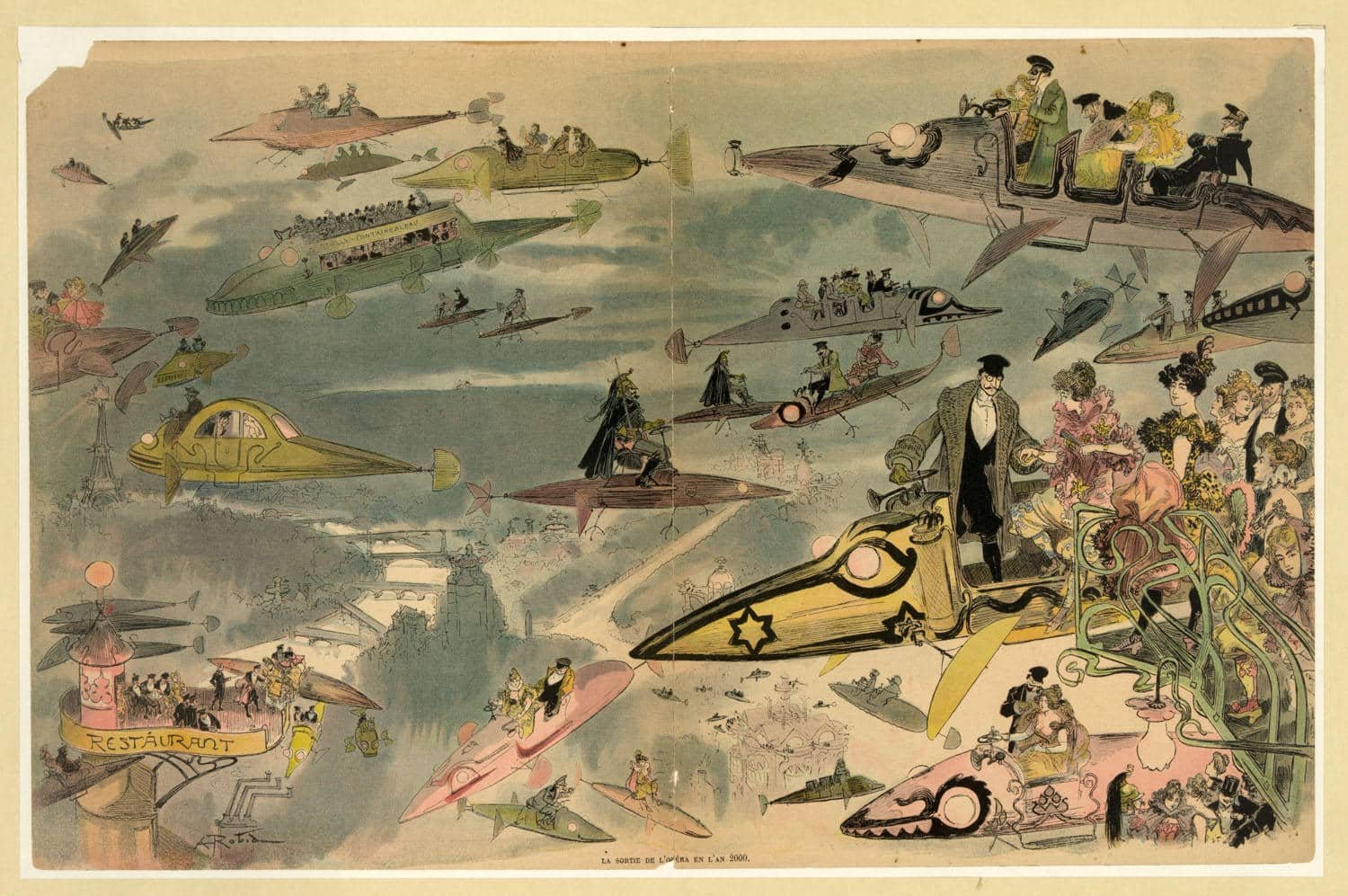
11 works · Albert Robida · click to enlarge
Caran d’Ache (1858–1909)
Caran d’Ache (born Emmanuel Poiré) was a Russian-French draftsman famous for his wordless stories and political satire. His clear and refined line allowed him to create highly effective narrative sequences — comic strips before anyone called them that — often commenting on current affairs, Belle Époque society and the divisions of the Dreyfus affair.
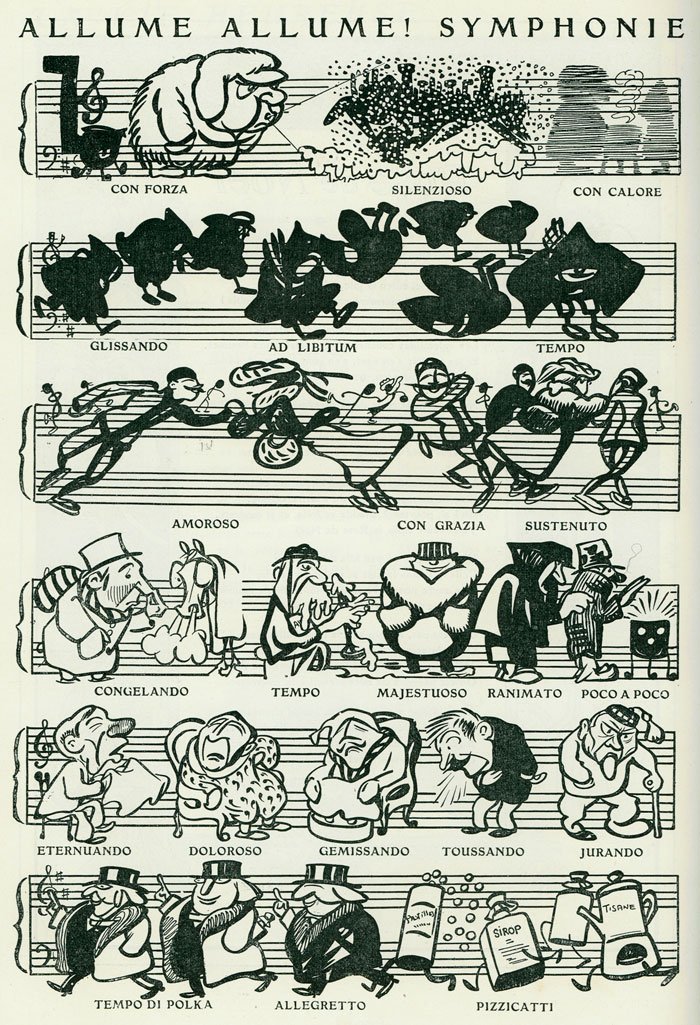
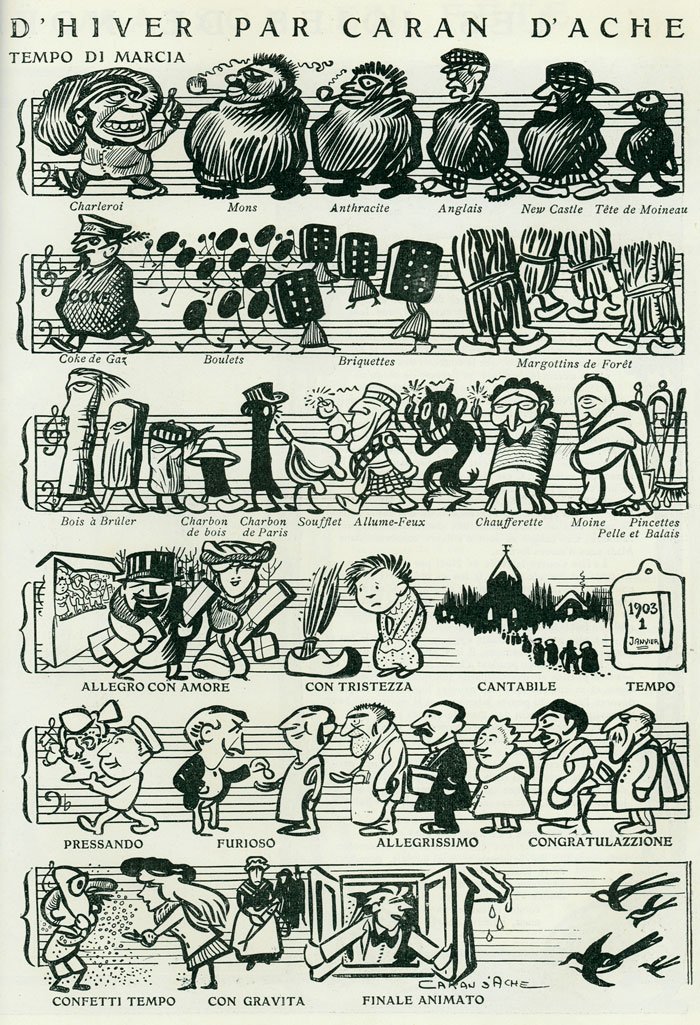
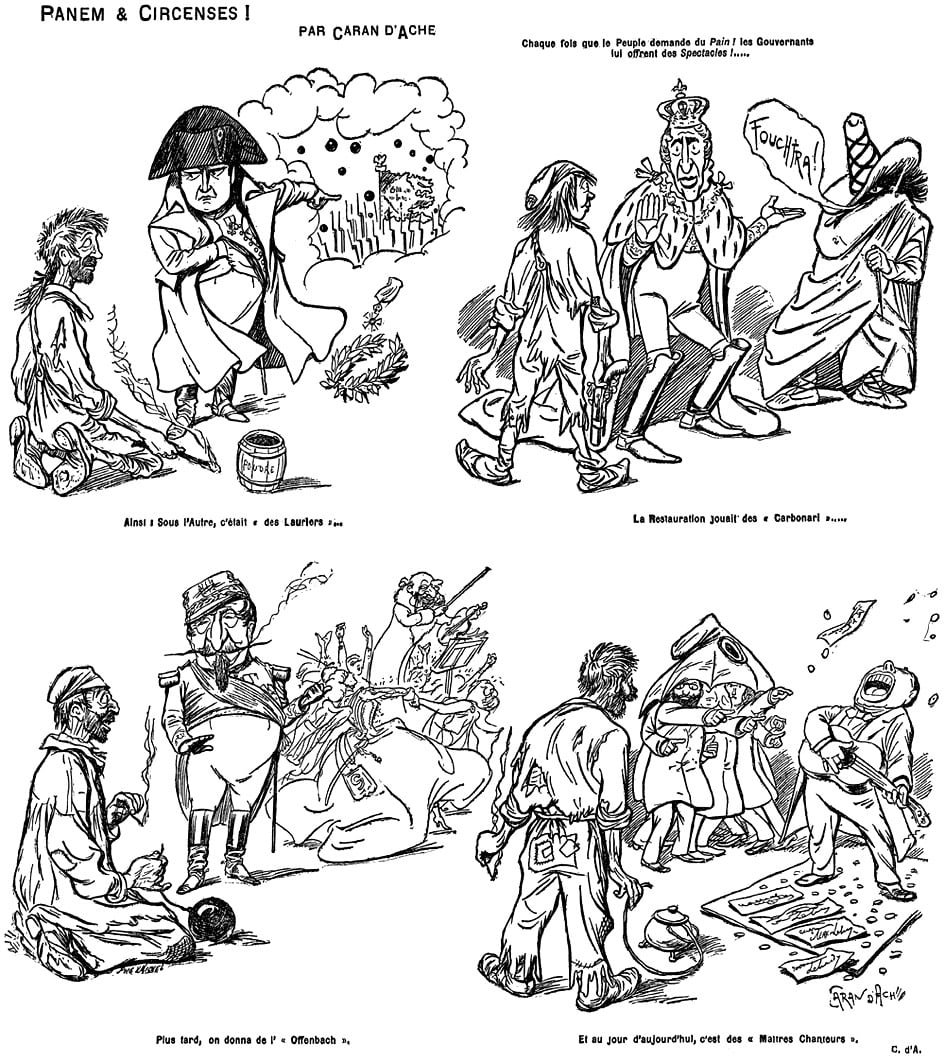
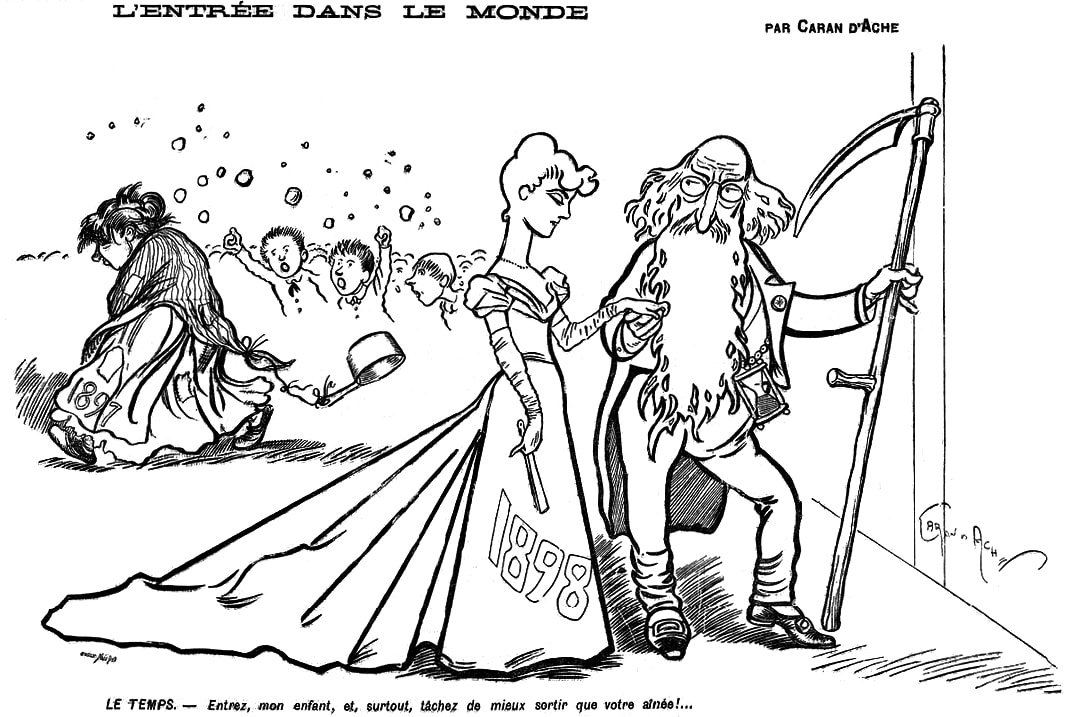
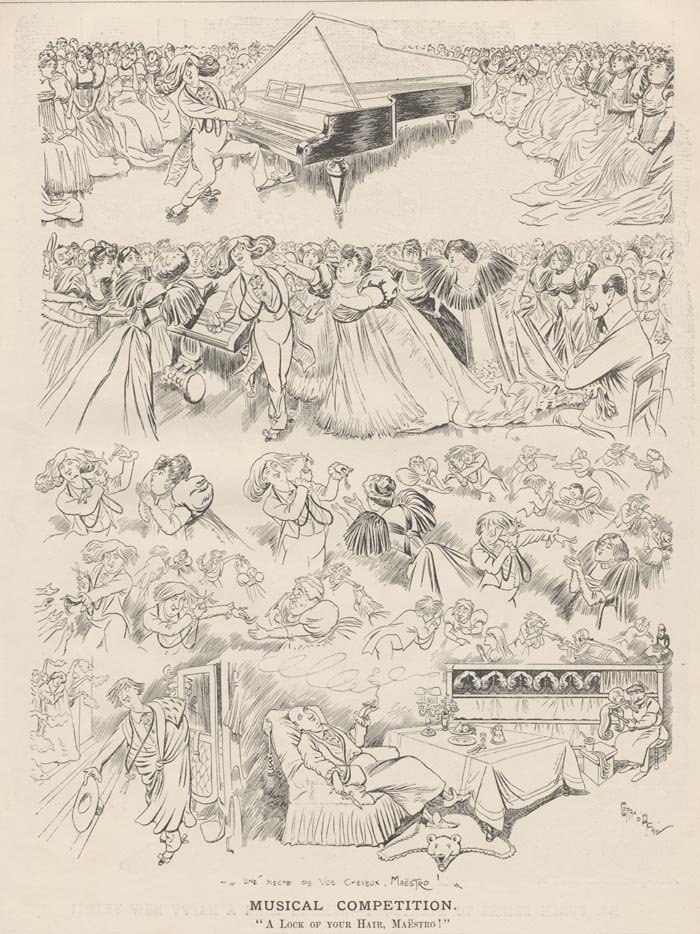
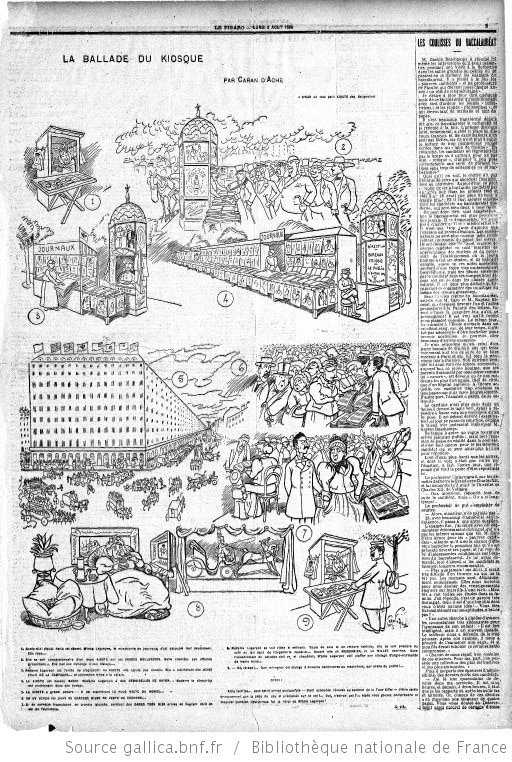
7 works · Caran d’Ache · click to enlarge
Roubille, Auguste (1872–1955)
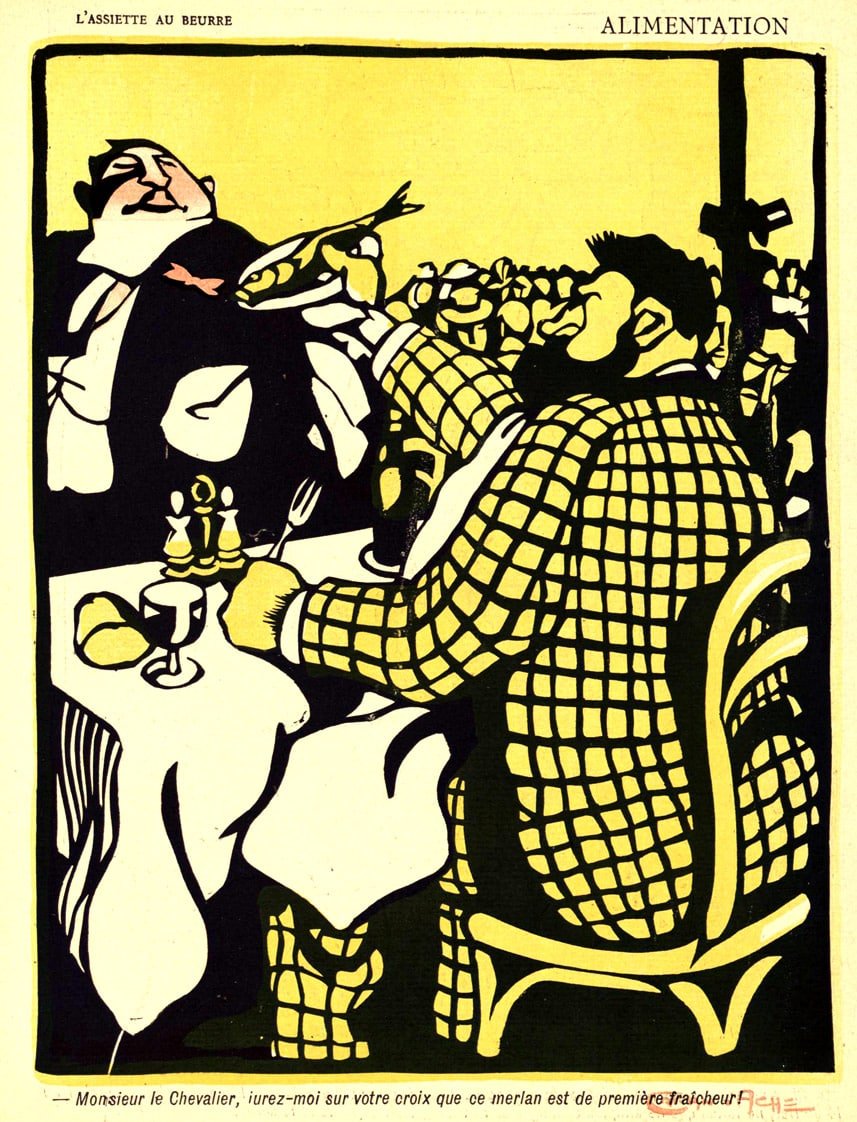
A French painter, poster designer and caricaturist, Roubille collaborated with numerous satirical magazines including L’Assiette au Beurre. Influenced by Art Nouveau, his style is characterised by sinuous lines and a strong decorative sense, applying his talent to both advertising and social criticism. Where Daumier wielded a bludgeon, Roubille used a scalpel — with considerable style.
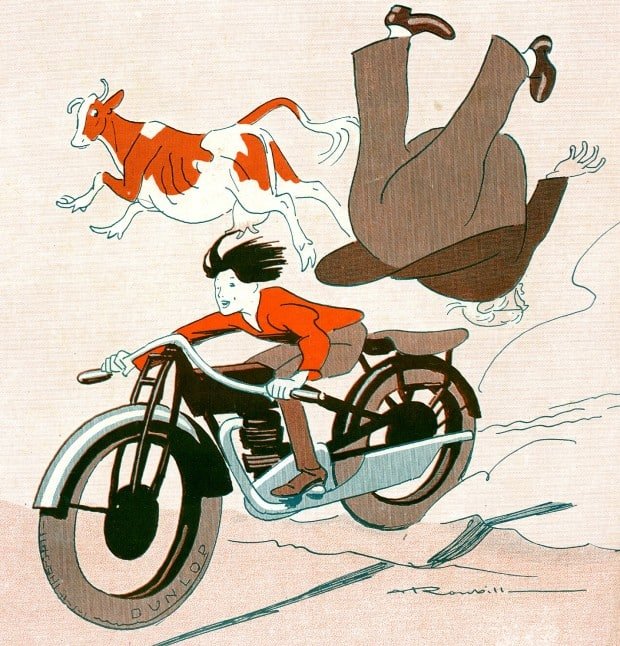
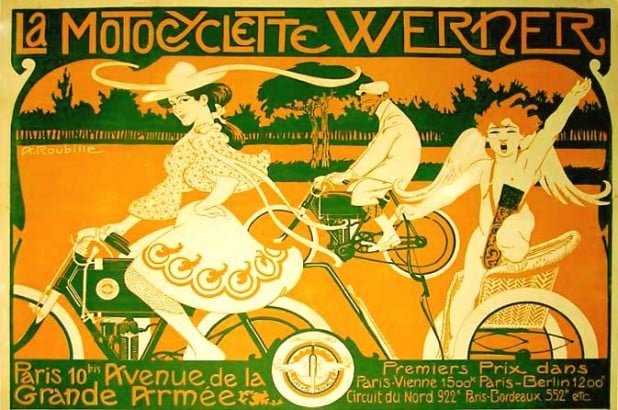
2 works · Auguste Roubille · click to enlarge
Elsewhere in Culture
In brief
- Albert Robida is a visionary, a pioneer of science fiction: his “telephonoscope” imagined the videophone and the flat-screen television as early as 1890.
- Caran d’Ache, born Emmanuel Poiré, is the master of the wordless story — highly effective narrative sequences, from Belle Époque society to the divisions of the Dreyfus affair.
- Auguste Roubille, influenced by Art Nouveau, put his sinuous lines at the service of L’Assiette au Beurre, of advertising as much as social criticism.
- This chapter presents 20 annotated works from the Belle Époque and the illustrated satirical press.
| Artist | Innovation | Themes | Publication |
|---|---|---|---|
| Albert Robida | Technological anticipation drawing | Future, technology, modernised society | La Caricature |
| Caran d’Ache | Wordless story (silent narrative) | Military life, current affairs, humour | Le Figaro, Psst…! |
| Auguste Roubille | Art Nouveau posters, flat colour | Social manners, anti-capitalism | L’Assiette au Beurre |
— Sébastien Rieu