The Pioneers & Innovators
of Caricature
Töpffer invented the comic strip. Grandville invented surrealism before its time. André Gill invented the big head. 11 original works.
Who are the pioneers and innovators of caricature?
Töpffer, Rodolphe (1799–1846)
Rodolphe Töpffer is considered the inventor and first theorist of the comic strip. A thinker, educator and draftsman from Geneva, he suffered from an eye disease that prevented him from becoming a painter, and so invented what he called “literature in prints” — a narrative format where pictures alone are ambiguous and text alone holds no meaning. Together, they make something entirely new. Goethe read his work and declared it had “a great future”. He was right. Without Töpffer, there is no Tintin, no Asterix, no Batman.
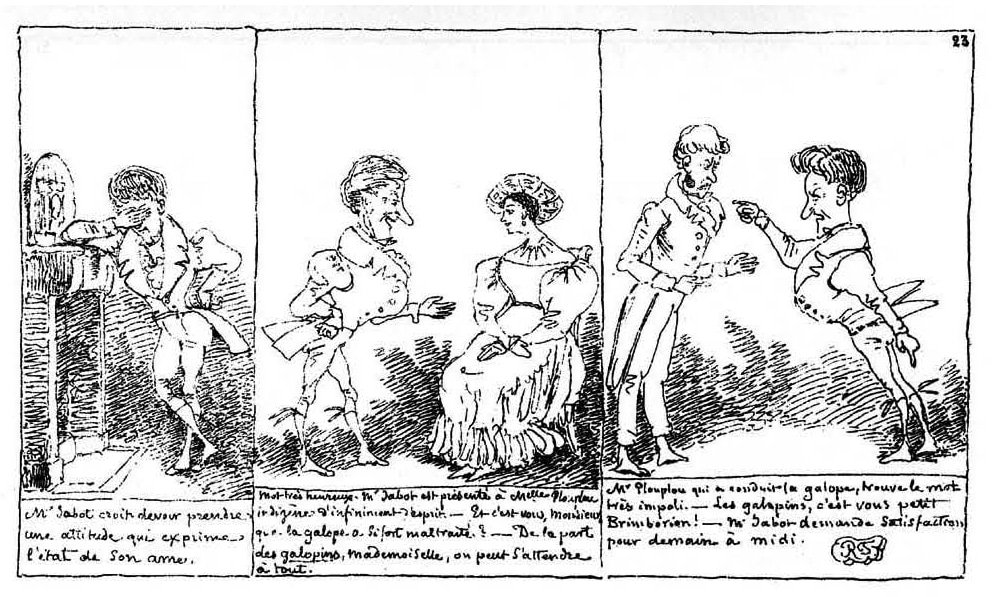
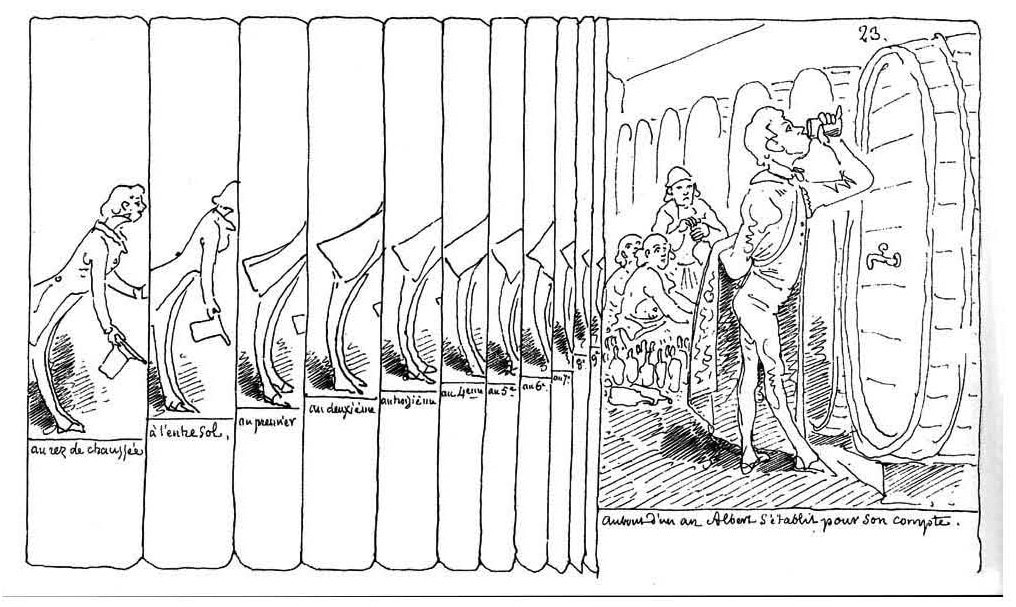
2 works · Rodolphe Töpffer · click to enlarge
Grandville (Jean-Ignace-Isidore Gérard, 1803–1847)
Grandville (Jean-Ignace-Isidore Gérard) was famous for his zoomorphic drawings — humans with animal heads — and his dreamlike universes. A stalwart of La Caricature and Le Charivari, his art drew on physiognomy, linking facial features to character. He died young, aged 43, having produced work that would influence Surrealism a century later.
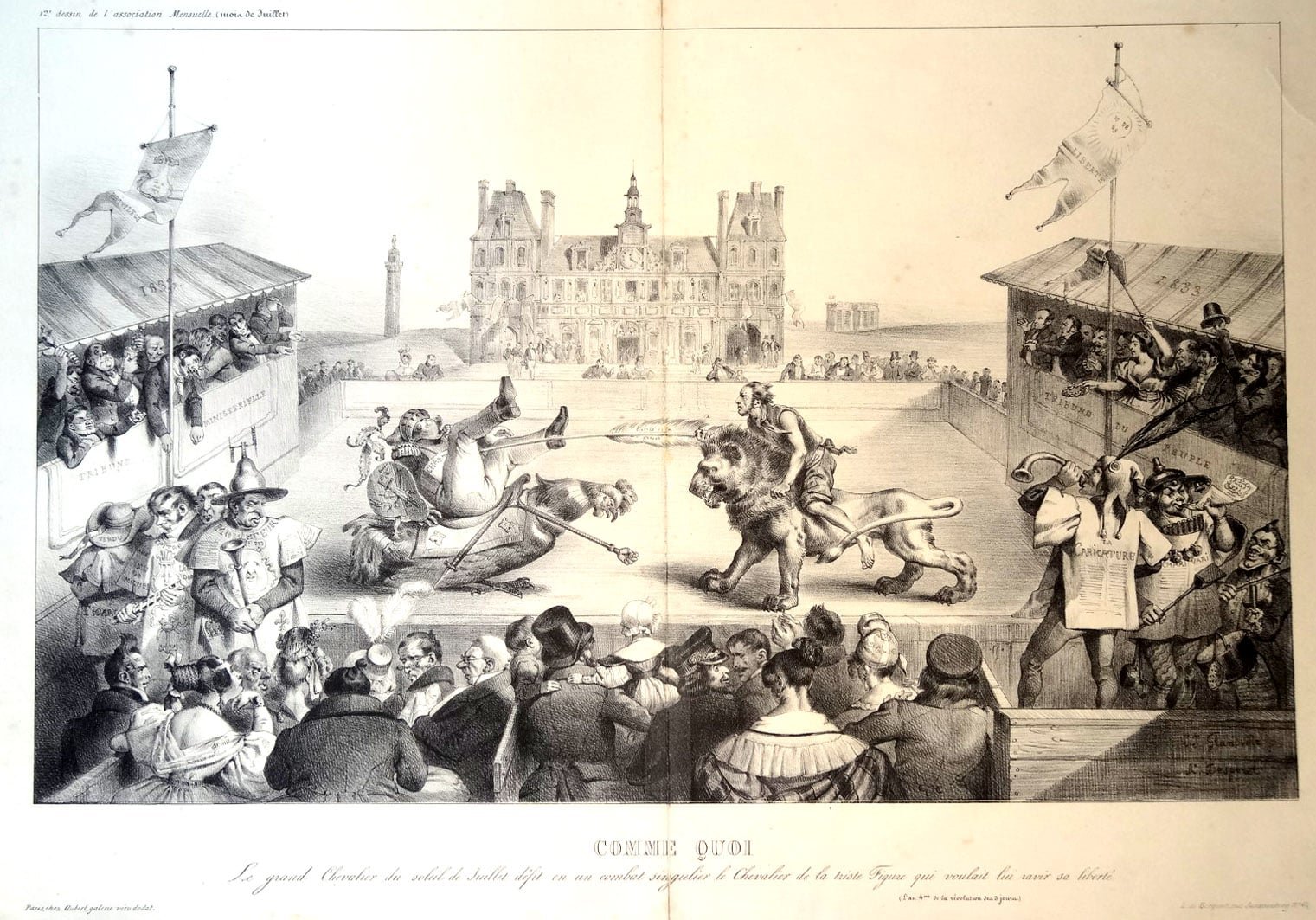
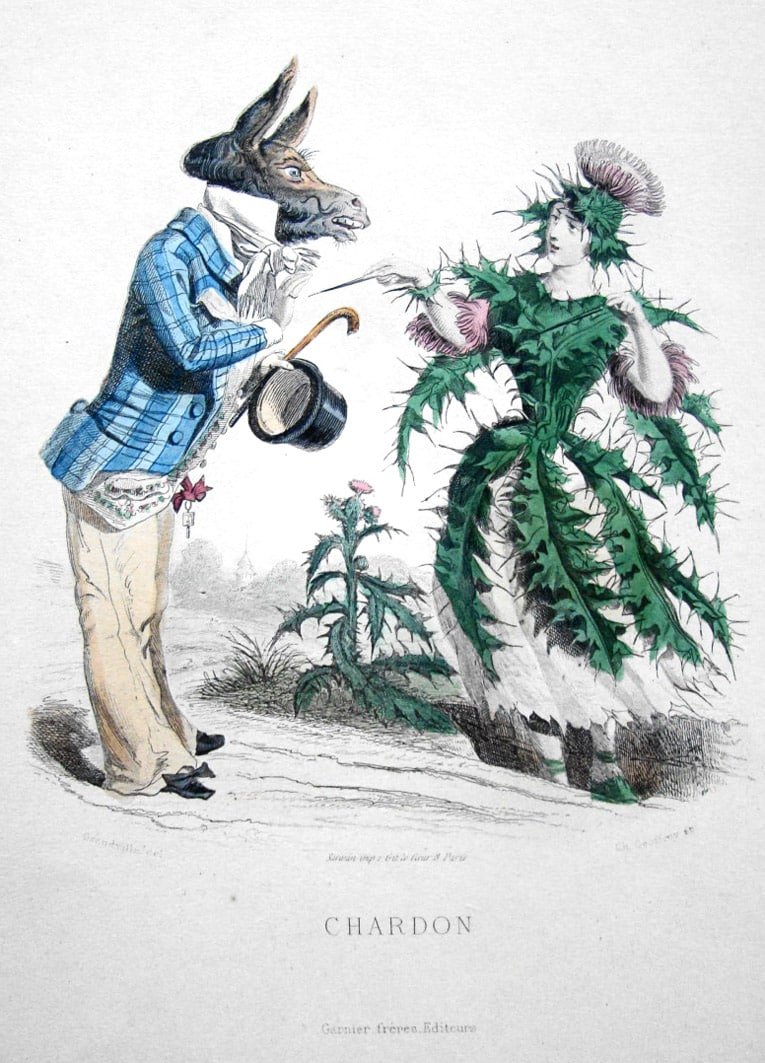
2 works · Grandville · click to enlarge
Traviès, Charles-Joseph (1804–1859)
Praised by Baudelaire for his empathy with common people, Traviès created the character “Mayeux” — a lecherous and cynical hunchback who became a popular archetype for criticising the customs of the July Monarchy. Where Daumier attacked power with fury, Traviès observed its victims with sorrow.
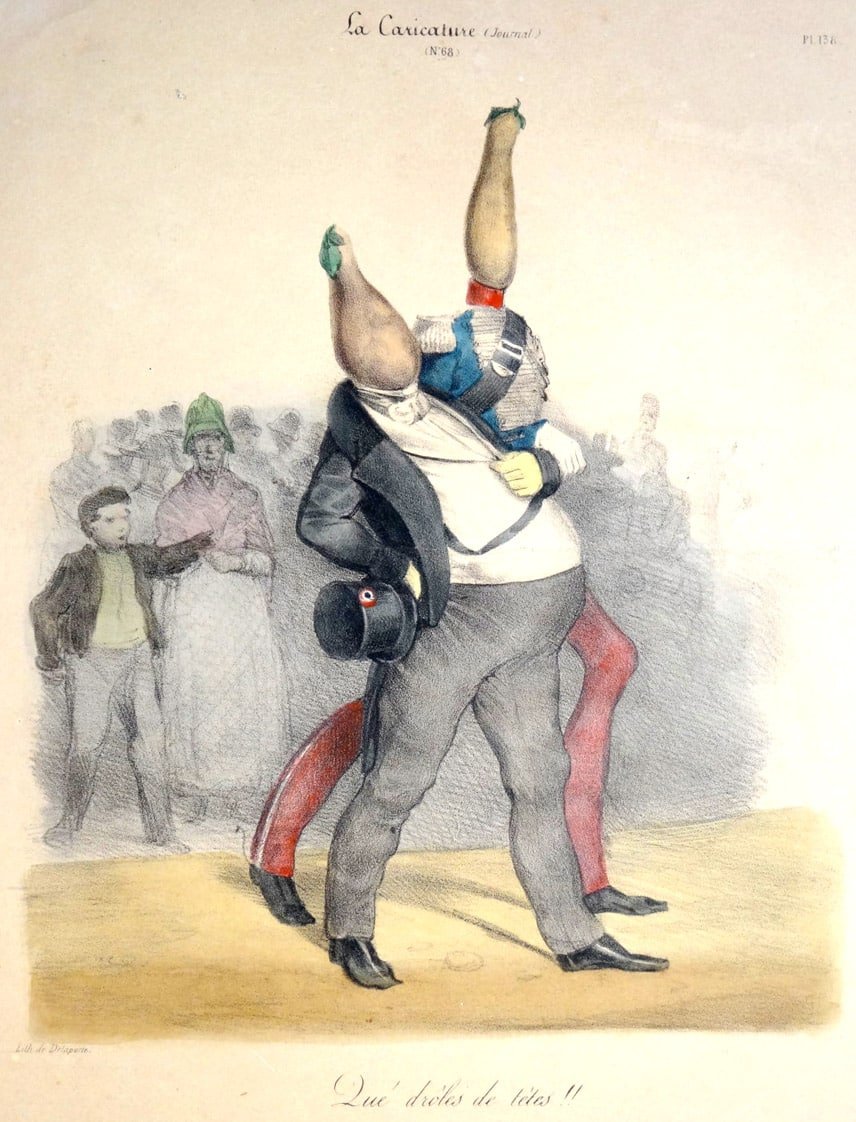
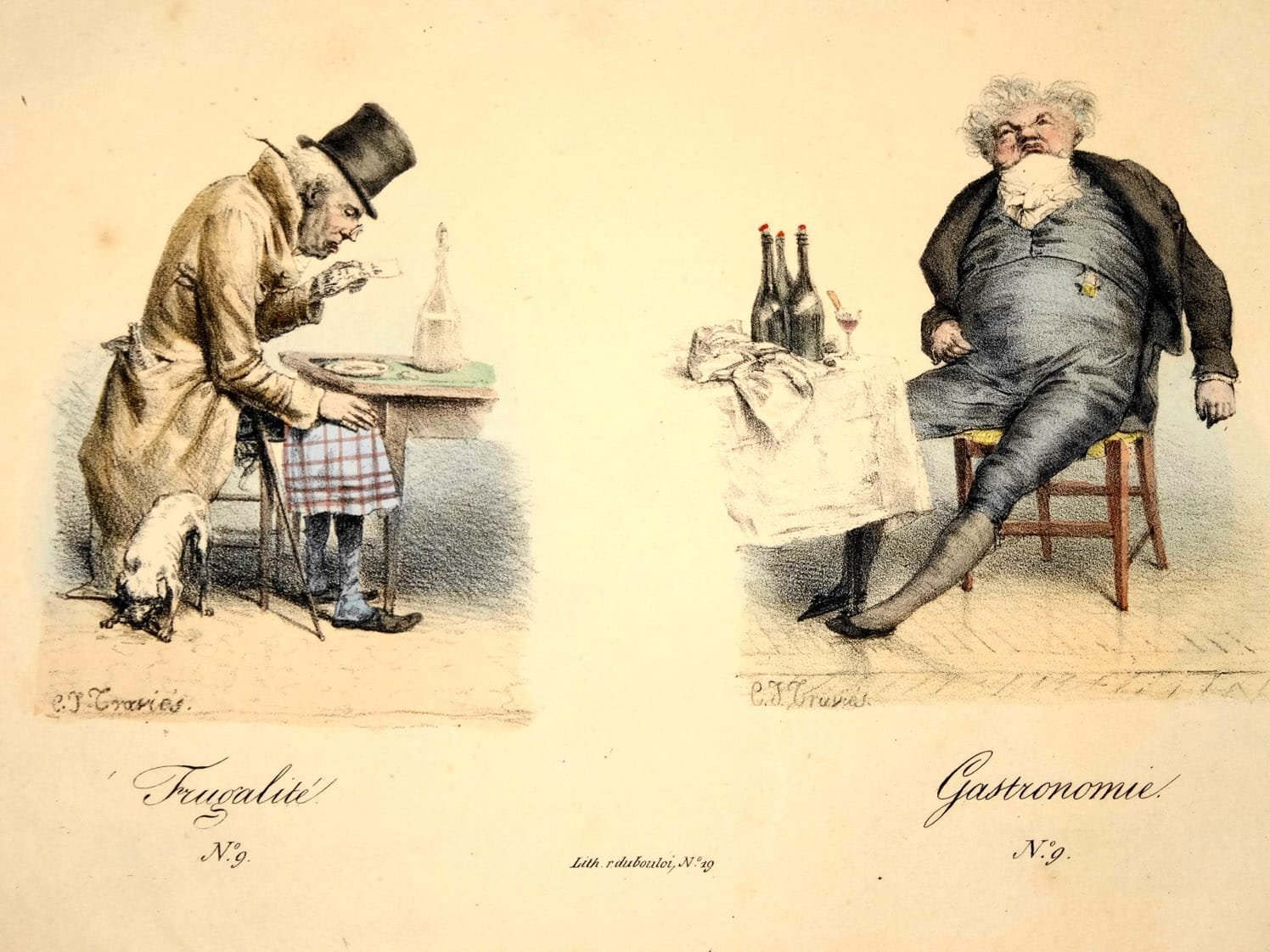
2 works · Charles-Joseph Traviès · click to enlarge
Cham (Amédée de Noé, 1818–1879)
Cham (real name: Amédée de Noé) was a prolific draftsman for Le Charivari, sketching Parisian society during the Second Empire with a lighter, more accessible humour than Daumier’s. He is especially known for his sequenced picture stories that foreshadowed modern comics. Where Daumier thundered, Cham smiled.
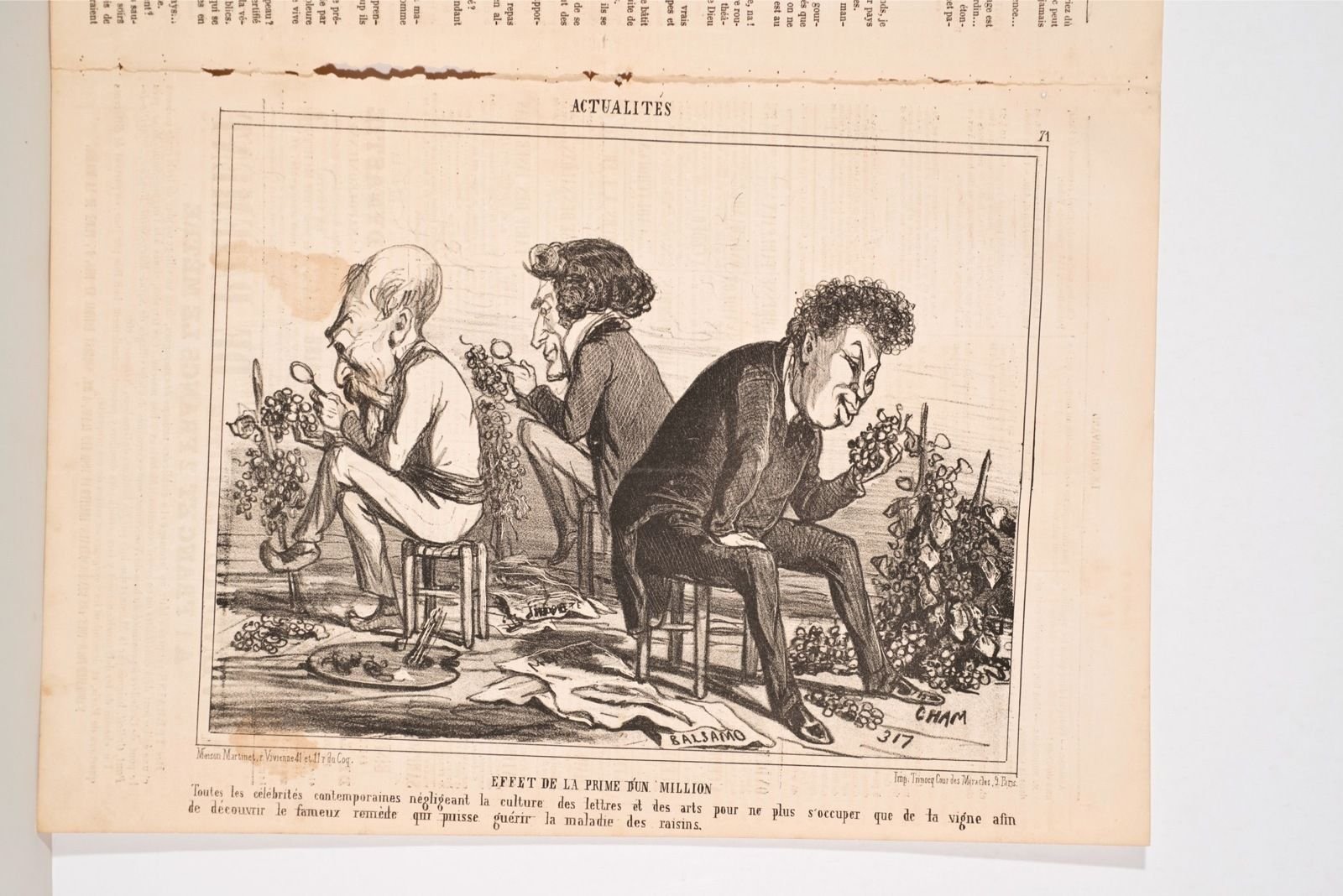
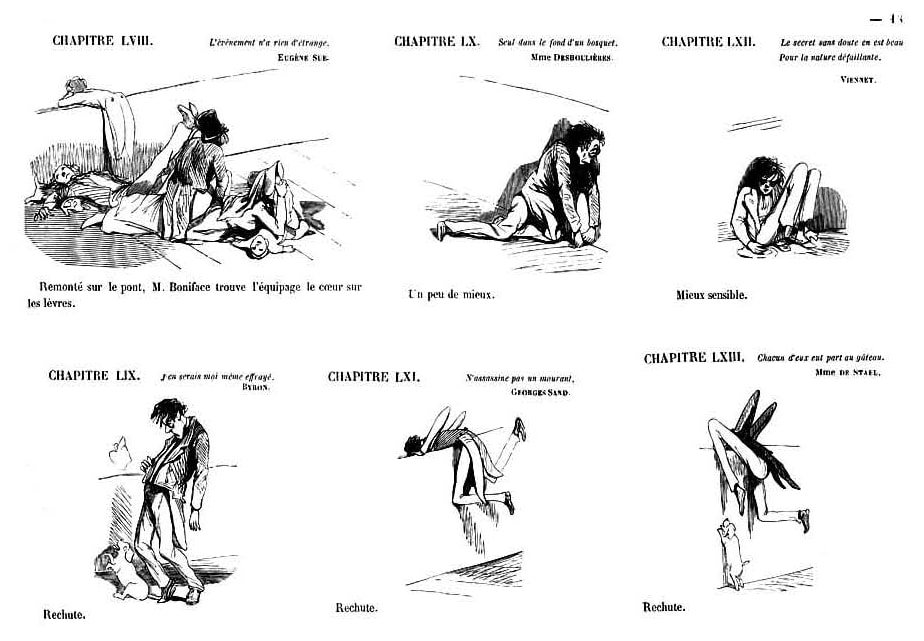
2 works · Cham · click to enlarge
André Gill (1840–1885)
André Gill (real name: Louis-Alexandre Gosset de Guines) was a famous French caricaturist during the Paris Commune and the Third Republic. His style is instantly recognisable: vividly coloured front-page caricatures showing politicians with enormous heads on tiny bodies, placed in striking allegorical scenarios. He effectively invented the visual grammar of the modern political cartoon cover.
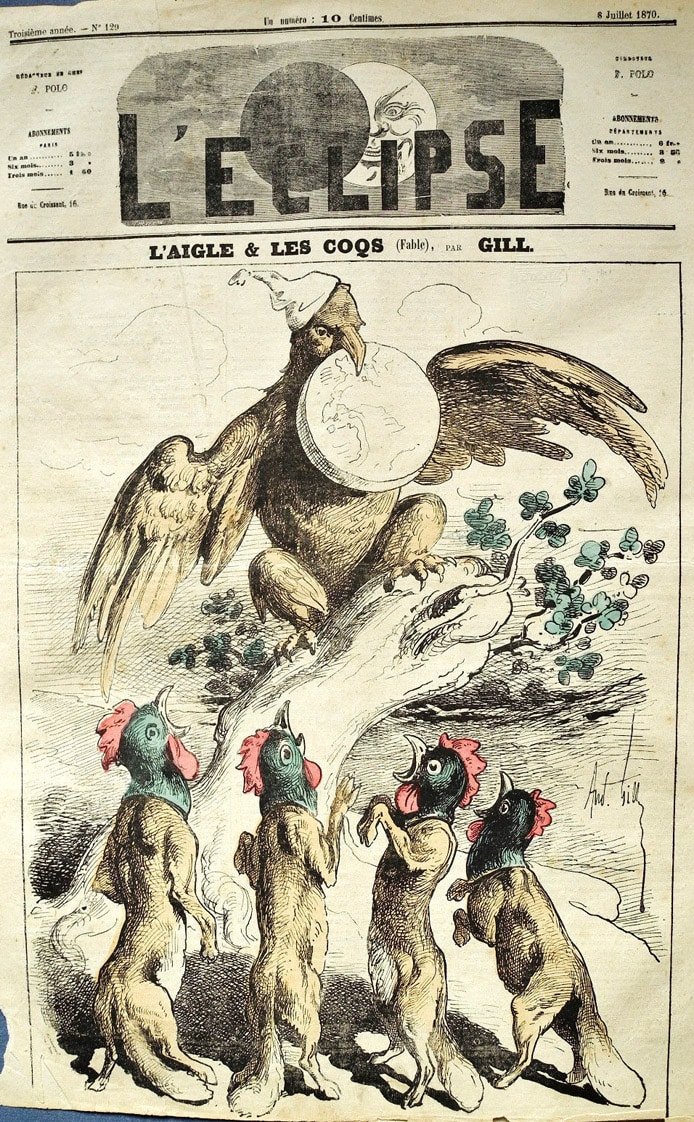
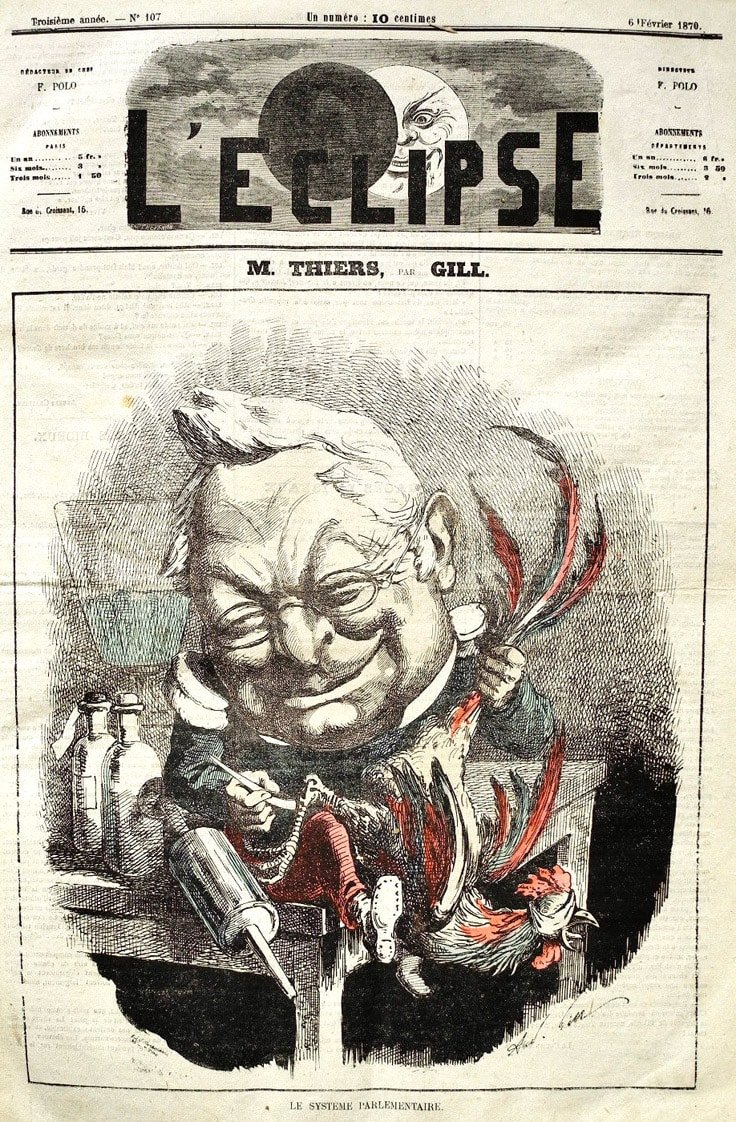
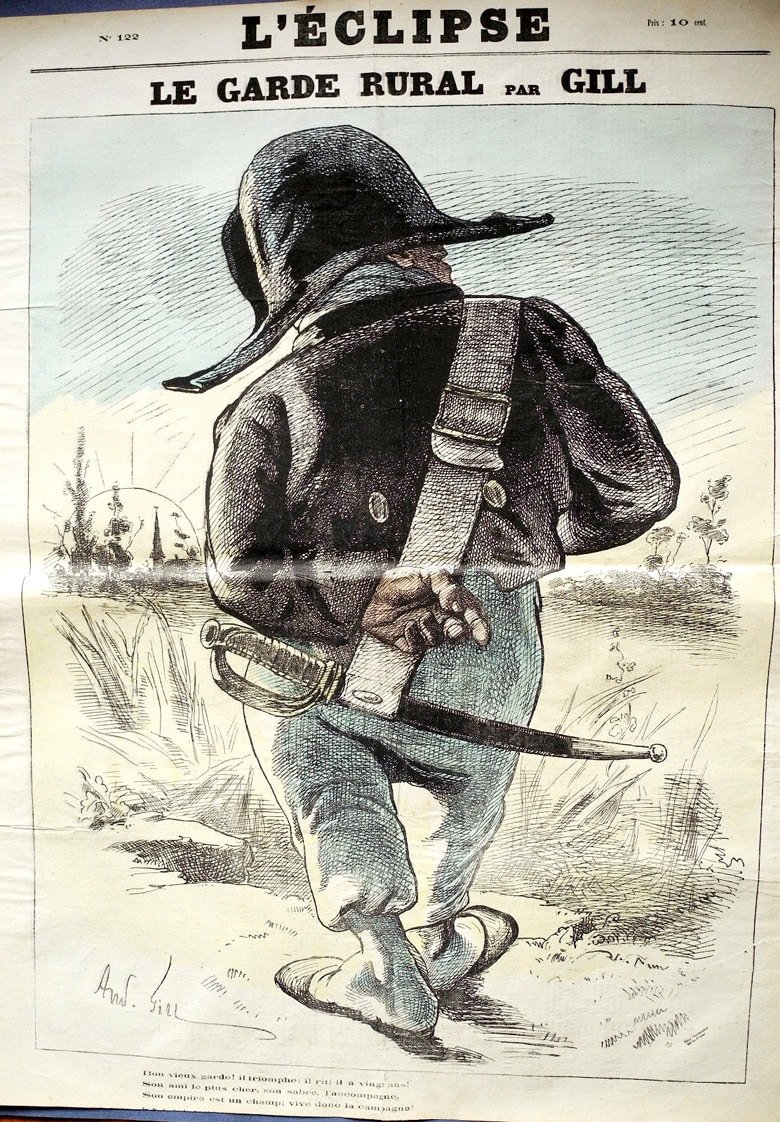
3 works · André Gill · click to enlarge
Elsewhere in Culture
In brief
- Rodolphe Töpffer is considered the inventor and first theorist of the comic strip: he called his creation “literature in prints”.
- Grandville is famous for his zoomorphic drawings — humans with animal heads, surrealism before its time.
- André Gill invented the “big head”: an enormous head on a tiny body, on the front page of La Lune and L’Éclipse — the very principle of the modern press caricature.
- This chapter presents 11 annotated works and closes the encyclopedia: 7 chapters, 98 works, 5 centuries of satire.
| Artist | Innovation | Visual signature | Work / publication |
|---|---|---|---|
| Rodolphe Töpffer | Inventor of the comic strip | Sequential narrative, text below the panels | Histoire de M. Jabot |
| J.-J. Grandville | Surrealism before its time | Animal-headed humans, metamorphoses | Les Métamorphoses du jour |
| Charles-Joseph Traviès | Social satire of the common people | The character of Mayeux (hunchback) | Le Charivari |
| Cham | Quick visual gags in vignettes | Lively sketches, punchy captions | Le Charivari |
| André Gill | Inventor of the big head | Enormous head on a tiny body | La Lune, L’Éclipse |
— Sébastien Rieu